Green silicon carbide powder 2.5 μm (6000 mesh) can improve petroleum-adsorption foamed ceramics by helping create a finer pore structure, stronger chemical resistance, better thermal stability and higher mechanical durability. These properties make it a valuable raw material for ceramic filters used in oily wastewater treatment, oil-water separation and petrochemical filtration systems.
The petrochemical industry faces challenges in oily wastewater treatment, requiring durable, high-performance filter materials. Green silicon carbide powder, 2.5um (6000mesh), offers remarkable advantages for foamed ceramic filters.
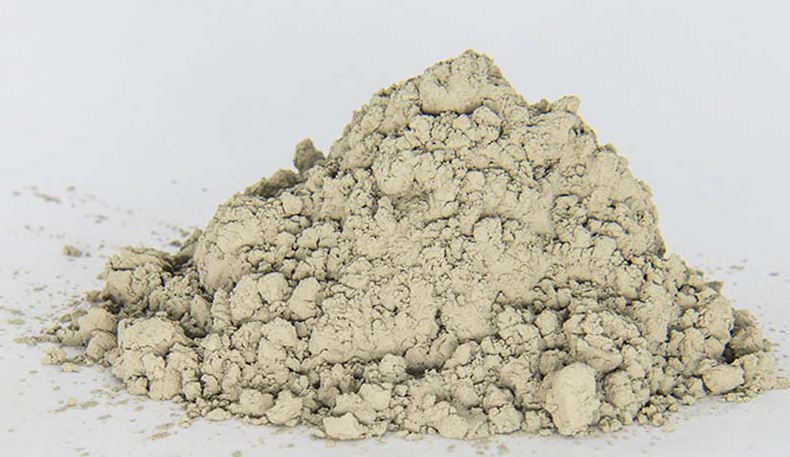
Green silicon carbide powder, with its unique properties, significantly improves the production and performance of petroleum adsorption foamed ceramics. Let’s explore its specific advantages in detail.
How does controllable pore structure improve adsorption capacity?
Efficient oil-water separation is essential for the petrochemical industry.[^1] Achieving this requires filter materials with optimized pore structures and adsorption characteristics.
The 6000mesh particle size of green silicon carbide creates fine and uniform microporous structures. These interconnected pores increase specific surface area, enabling high adsorption and retention of petroleum and emulsified oil.[^2]
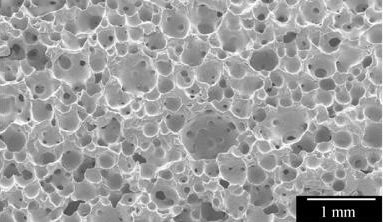
Green silicon carbide achieves a balance of pore size, uniformity, and connectivity. This leads to strong oil adsorption and retention properties, critical for separating petroleum hydrocarbons from oily wastewater. Such materials perform efficiently under continuous filtration conditions.
What makes green silicon carbide capable of excellent chemical stability?
Filters used in petrochemical processes face long-term exposure to harsh chemical environments, often containing acids, alkalis, and organic compounds. Durability under these conditions is a primary concern.
Green silicon carbide resists corrosion from acids, alkalis, and oily wastewater.[^3] Its chemical inertness ensures no dissolution, degradation, or performance loss over time.
The high purity of green silicon carbide ensures stability, making it ideal for demanding environments in oilfields and chemical plants. This durability reduces maintenance needs and ensures a reliable filtering process.
What role does thermal resistance play in foamed ceramics?
Oilfield environments often experience rapid and extreme temperature changes. Filter media must maintain structural integrity under thermal stress to avoid failure.
This resistance ensures ceramics survive in fluctuating high-temperature conditions, improving their usability in oilfield operations. Long service life under tough conditions adds value to filtration systems.
How does mechanical strength enhance the durability of foamed ceramics?
Mechanical stress from pressure differentials and water flow can wear down filter materials. Strength and resistance to abrasion are crucial for extended service life.
Green silicon carbide’s high hardness and mechanical properties fortify foamed ceramics against pressure, impact, and abrasive forces, minimizing breakage and maintaining efficiency for longer periods.
By incorporating green silicon carbide, filters resist damage and distortions caused by daily operations. This durability directly translates to lower replacement costs and less downtime.
Why is molding compatibility important in filter production?
Producing high-quality foamed ceramics requires materials to have good dispersion and compatibility with additives and substrates. Without this compatibility, achieving effective porosity and structural uniformity is challenging.
This compatibility simplifies manufacturing processes and ensures predictable results in ceramics, enabling customized solutions for petrochemical filtration needs.
Conclusion
Green silicon carbide powder 2.5um (6000mesh) revolutionizes petroleum adsorption foamed ceramics by delivering exceptional adsorption, chemical stability, thermal resistance, mechanical strength, and molding compatibility.
[^1]: “Petroleum Refining Effluent Guidelines | US EPA”, https://www.epa.gov/eg/petroleum-refining-effluent-guidelines. Government wastewater guidance for petroleum-related effluents identifies oil and grease control as a central treatment objective, supporting the article’s statement that oil-water separation is essential in petrochemical operations. Evidence role: general_support; source type: government. Supports: The source should support that oil and grease removal or oil-water separation is a recognized requirement in petroleum or petrochemical wastewater treatment.. Scope note: Regulatory guidance establishes treatment importance but does not evaluate the article’s specific ceramic filter material.
[^2]: “Review of the Preparation and Application of Porous Materials for …”, https://pmc.ncbi.nlm.nih.gov/articles/PMC10420137/. Research on porous adsorbents for oily wastewater indicates that interconnected pore networks and higher accessible surface area can enhance oil capture and retention, supporting the mechanism described for foamed ceramic filters. Evidence role: mechanism; source type: paper. Supports: The source should support that porous media with higher surface area and connected pores can improve adsorption or retention of oil droplets in oily wastewater.. Scope note: This supports the adsorption mechanism in porous media generally; direct performance depends on the ceramic formulation, surface chemistry, and test conditions.
[^3]: “Corrosion Characteristics of Silicon Carbide and Silicon Nitride – PMC”, https://pmc.ncbi.nlm.nih.gov/articles/PMC4907592/. Materials-property references describe silicon carbide as a chemically resistant ceramic with stability in many acidic and alkaline environments, supporting its suitability for chemically harsh filtration settings. Evidence role: general_support; source type: education. Supports: The source should support that silicon carbide ceramics are chemically inert or resistant to many acids and alkalis under typical conditions.. Scope note: The source should not be read as proof of universal resistance under all concentrations, temperatures, or wastewater chemistries.
[^4]: “Material Properties of a Sintered a-SiC”, https://srd.nist.gov/JPCRD/jpcrd529.pdf. Ceramic materials studies associate silicon carbide’s low coefficient of thermal expansion and favorable thermal properties with high thermal-shock resistance, supporting its use where rapid temperature changes may occur. Evidence role: mechanism; source type: paper. Supports: The source should support that silicon carbide’s thermal properties, including low thermal expansion and high thermal conductivity, contribute to thermal-shock resistance in ceramics.. Scope note: The source may explain the mechanism generally; crack prevention in a specific foamed ceramic also depends on porosity, binder composition, and firing conditions.
[^5]: “Fabrication of SiC Porous Ceramics by Foaming Method – PMC”, https://pmc.ncbi.nlm.nih.gov/articles/PMC9962626/. Studies of foamed silicon carbide ceramic processing show that powder dispersion and foaming conditions influence pore uniformity and final ceramic structure, supporting the article’s manufacturing-process claim. Evidence role: mechanism; source type: paper. Supports: The source should support how dispersion quality and foaming-agent interactions affect pore formation and uniformity in silicon carbide foamed ceramics.. Scope note: The source may support the processing mechanism without proving that every commercial green silicon carbide powder disperses evenly in all formulations.