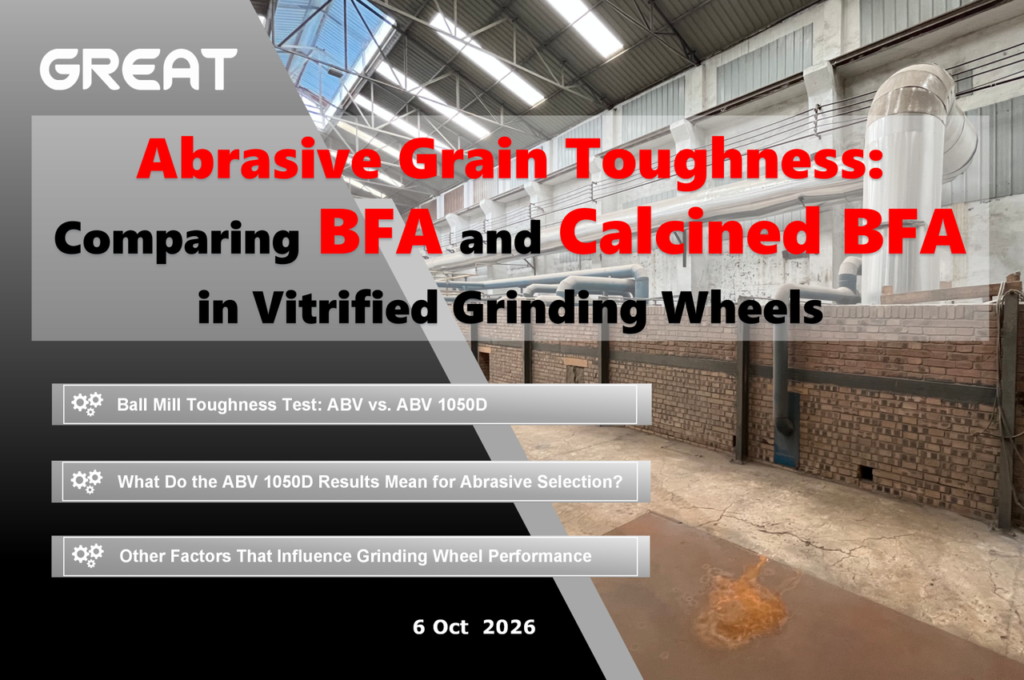
Abrasive grain toughness plays an important role in the durability, cutting performance, and service life of vitrified grinding wheels. For grinding wheel manufacturers, choosing between conventional Brown Fused Alumina (BFA) and Calcined Brown Fused Alumina requires understanding how their mechanical properties differ.
This article compares conventional BFA (ABV) and Calcined BFA (ABV 1050D) using ball mill toughness test results for F46, F54, F60, and F80. The findings help manufacturers evaluate which abrasive grade may better suit their grinding wheel applications.
What Is the Difference Between Toughness, Brittleness, and Friability?
Although closely related, toughness, brittleness, and friability describe different abrasive grain properties.
| Property | Definition | Significance in Grinding |
|---|---|---|
| Toughness | Resistance to mechanical damage and fracture | Helps grains withstand grinding forces |
| Brittleness | Tendency to fracture with limited plastic deformation | Influences grain fracture behavior |
| Friability | Tendency to break down under mechanical stress | Supports the formation of fresh cutting edges |
Higher toughness can help prevent premature grain breakdown. However, sufficient friability is necessary for effective self-sharpening.
The ideal abrasive grain is not necessarily the toughest, but the one that provides the right balance between durability and cutting-edge renewal.
How Does Calcined Brown Fused Alumina Compare with Conventional BFA in Ball Mill Toughness Tests?
Ball mill toughness tests were conducted to compare conventional ABV and calcined ABV 1050D across four grit sizes.
Comparative Ball Mill Toughness Results
| Grit Size | ABV — Brown Fused Alumina | ABV 1050D — Calcined Brown Fused Alumina | ABV 1050D Average | Increase vs. ABV |
| F46 | 36 | 50.5, 50, 50 | 50.17 | 0.394 |
| F54 | 37 | 56.9, 50, 50 | 52.3 | 0.414 |
| F60 | 40 | 64.2, 62.7 | 63.45 | 0.586 |
| F80 | 43 | 67.5, 64.8 | 66.15 | 0.538 |
The recorded results show that ABV 1050D consistently achieved higher ball mill toughness values than conventional ABV.
| Comparison | Test Findings |
|---|---|
| Tested grit sizes | F46, F54, F60, F80 |
| Conventional ABV values | 36–43 |
| ABV 1050D average values | 50.17–66.15 |
| Relative increase | 39.4%–58.6% |
| Largest relative increase | F60, approximately 58.6% |
| Overall trend | ABV 1050D recorded higher values at every tested grit size |
Note: The ABV values are the supplied recorded results, while the ABV 1050D averages were calculated from the available measurements. Percentage increases are based on these values. Test units and the detailed testing protocol were not provided.
What Do the Test Results Reveal?
Higher Ball Mill Toughness Values
ABV 1050D demonstrated higher recorded values across all four grit sizes, indicating greater resistance to grain breakdown under the applied ball mill test conditions.
Consistent Improvement Across Different Grit Sizes
The relative difference ranged from approximately 39.4% to 58.6%, with F60 showing the largest increase.
Potential Advantages for Grinding Wheel Production
These results suggest that ABV 1050D may be worth evaluating in vitrified grinding wheel formulations requiring greater grain durability.
However, higher ball mill toughness values do not directly indicate an equivalent improvement in grinding efficiency or wheel life. Practical grinding tests are required to confirm performance benefits.

How Does Abrasive Grain Toughness Affect Vitrified Grinding Wheel Performance?
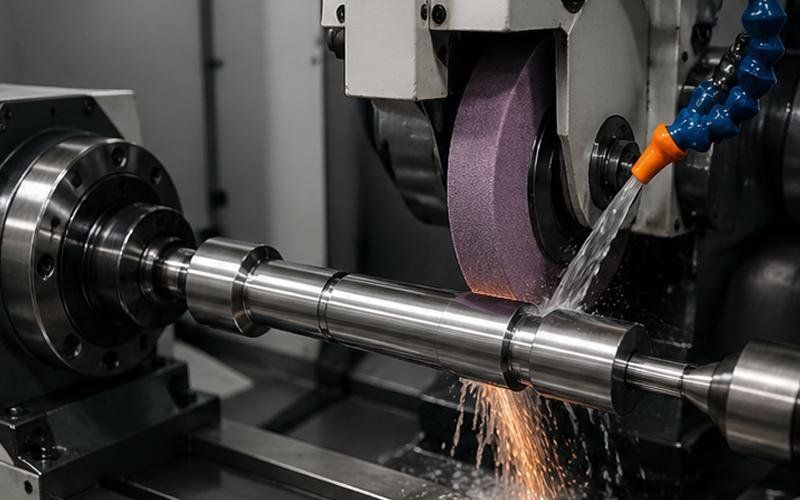
Vitrified grinding wheels consist of abrasive grains, a ceramic bond, and pores. Their performance depends on the interaction between these components.
Grain Durability and Wear Resistance
During grinding, abrasive grains are subjected to repeated mechanical loading.
Grains with suitable toughness can better resist premature fracture, potentially reducing unnecessary abrasive consumption under certain grinding conditions.
Self-Sharpening Ability
Self-sharpening occurs when worn grains fracture or are released by the bond, exposing fresh cutting edges.
However, excessively tough grains may resist useful fracture after becoming dull, potentially increasing grinding forces and heat generation.
Therefore, greater toughness does not always mean better cutting performance.
Wheel Life and Grinding Efficiency
Grain toughness can influence wheel wear and cutting-edge retention, but overall grinding performance also depends on several factors.
| Factor | Influence on Grinding Performance |
|---|---|
| Abrasive toughness | Resistance to premature grain fracture |
| Grain friability | Cutting-edge renewal |
| Bond strength | Grain retention and release |
| Wheel porosity | Chip clearance and coolant access |
| Dressing conditions | Cutting-edge exposure and wheel sharpness |
| Grinding parameters | Grinding forces, temperature, and wear |
The best performance comes from matching abrasive grain properties with the wheel structure and operating conditions.
When Should Grinding Wheel Manufacturers Consider Calcined Brown Fused Alumina?
The higher recorded ball mill toughness of ABV 1050D makes it a potential option for applications where premature abrasive grain breakdown is a concern.
Possible evaluation areas include:
- Vitrified grinding wheels: Formulations requiring greater grain durability.
- High mechanical loading: Operations where abrasive grains experience repeated mechanical stress.
- Wheel wear optimization: Applications where premature grain fracture contributes to abrasive consumption.
- Bond formulation development: Grinding wheels requiring an adjusted balance between grain toughness and retention.
However, conventional ABV may still be preferable in applications where more readily fractured grains provide better self-sharpening.
The choice between ABV and ABV 1050D should be based on actual grinding requirements rather than toughness values alone.
What Other Factors Should Be Considered When Selecting Abrasive Grains?
Besides toughness, several factors influence the performance of vitrified grinding wheels.
| Factor | Key Consideration |
|---|---|
| Abrasive grit size | Influences cutting-edge density, chip formation, and surface finish |
| Vitrified bond formulation | Determines grain retention and release behavior |
| Wheel porosity | Supports chip clearance and coolant penetration |
| Workpiece material | Determines abrasive loading and cutting requirements |
| Grinding conditions | Affect grinding forces, temperature, and abrasive wear |
For example, a tougher grain may perform well under demanding mechanical loads but may not deliver the same advantages in precision grinding operations requiring frequent cutting-edge renewal.
Laboratory toughness data should therefore be considered alongside the complete grinding wheel specification.
How Can Manufacturers Verify the Performance of ABV 1050D in Production?
Ball mill testing provides useful comparative data, but actual grinding performance should be verified through controlled trials.
A practical evaluation should compare ABV and ABV 1050D under equivalent conditions.
| Evaluation Item | What to Compare |
|---|---|
| Wheel specifications | Comparable bond, structure, and abrasive grit size |
| Grinding conditions | Same workpiece, wheel speed, feed rate, and depth of cut |
| Material removal | Material removal rate and grinding efficiency |
| Power consumption | Grinding forces and energy requirements |
| Wheel wear | Wheel wear rate, dressing frequency, and grinding ratio |
| Workpiece quality | Surface roughness, dimensional accuracy, and thermal damage |
| Test consistency | Repeatability across multiple trials |
Controlled testing helps determine whether the higher ball mill toughness values of ABV 1050D translate into measurable benefits in wheel performance.
For reliable comparisons, the ball mill test method, sample preparation, and measurement units should also be standardized.
Which Is the Better Choice: Conventional BFA or Calcined BFA?
Based on the available ball mill toughness results, Calcined Brown Fused Alumina (ABV 1050D) demonstrated higher recorded toughness values than conventional Brown Fused Alumina (ABV) across all four tested grit sizes.
The average values were approximately 39.4%–58.6% higher, suggesting that ABV 1050D may offer greater resistance to grain breakdown under the specified laboratory test conditions.
However, higher toughness does not automatically guarantee longer wheel life or better grinding efficiency.
For vitrified grinding wheel manufacturers, the optimal abrasive depends on the balance between toughness, friability, bond retention, and grinding conditions.
The best abrasive is the one that delivers the required cutting performance, consistent wheel quality, and cost efficiency in your specific application.
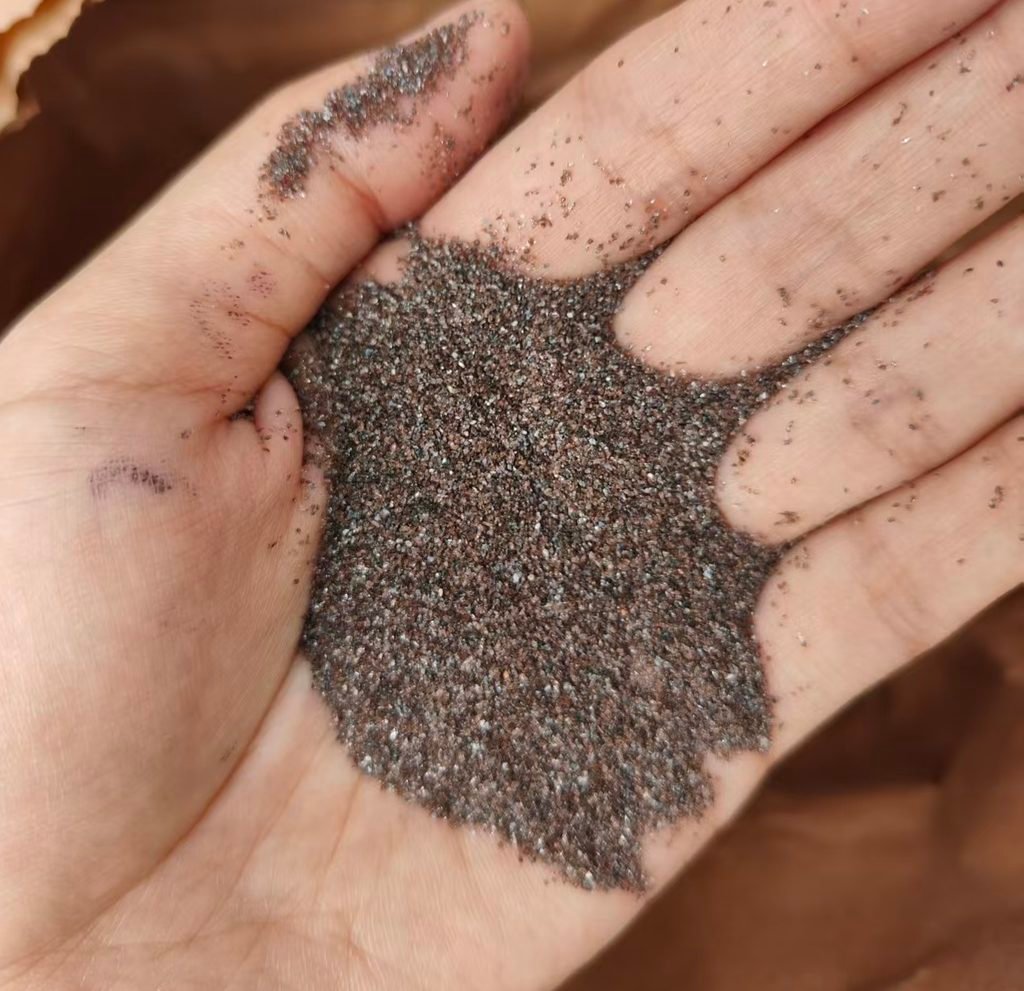
Looking for the Right Brown Fused Alumina for Your Grinding Wheels?
Whether your production requires conventional Brown Fused Alumina or Calcined Brown Fused Alumina, selecting a suitable grain grade starts with understanding your grinding application and performance requirements.
GREAT Abrasive supplies Brown Fused Alumina in a range of grit sizes and grades for bonded abrasive manufacturing.
Share your grit size, grinding wheel application, and technical requirements with GREAT Abrasive to evaluate the most suitable abrasive solution for your production.