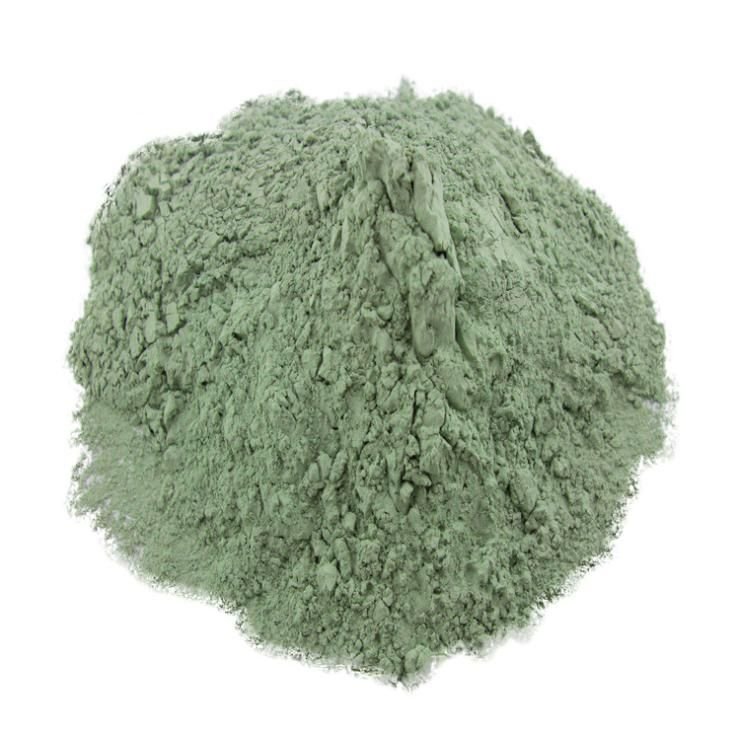
Green silicon carbide powder 1000# is a proven way to upgrade non-stick coatings that face heat, abrasion, and repeated cleaning. Many cookware makers struggle with back-sticking at high temperatures, surface wear, and gloss loss. Adding fine GC micro-powder to the topcoat improves hardness, wear resistance, and thermal stability without compromising its non-stick performance.
Green silicon carbide powder 1000# strengthens non-stick coatings by boosting hardness, abrasion resistance, and thermal stability in the outermost layer. The fine SiC particles disperse evenly, reduce back-sticking at high temperatures, and improve washability. When used at optimized loadings, SiC 1000# maintains smooth feel and release while significantly extending coating life.
Manufacturers often ask for a simple playbook: where to add SiC, what particle size to choose, and how much to use without hurting release. Below, I break down the why, how, and how much—with data, practical tips, and side-by-side comparisons you can use in your next trial.
Why does green silicon carbide powder 1000# boost non-stick coating durability?
A well-performing non-stick topcoat must resist heat, abrasion, and washing. Many silicone and PTFE systems still lose hardness or “back stick” when hot. The root problem is insufficient mechanical reinforcement. Green silicon carbide powder 1000# addresses this with high hardness and excellent thermal stability right where it matters most—the top layer.
Green silicon carbide powder 1000# increases wear resistance and heat tolerance by embedding micro-hard particles across the topcoat. The particles distribute friction load, prevent micro-scratching, and stabilize the surface under heat.[^1] As a result, the coating resists scuffing, keeps its gloss longer, and avoids back-sticking at cooking temperatures.
How it works in practice
- High hardness: Silicon carbide is about 9–9.5 on the Mohs scale. In the 1000# size range, it acts as a micro-reinforcement that resists scratch and wear without feeling gritty.
- Heat resistance: SiC remains stable well above typical cookware operating temperatures.[^2] For PTFE systems (up to ~260°C continuous) and silicone systems (~200–220°C), SiC 1000# does not degrade or soften.
- Load distribution: Under scrubbing and utensil contact, the SiC particles share the load across many micro points. This reduces binder damage and slows gloss loss.
- Reduced back-sticking: Silicone coatings can soften at heat, then re-stick. The micro-reinforced surface of green SiC 1000# resists tack and helps keep the surface “dry” at temperature.
How should you choose particle size and loading for green silicon carbide powder 1000#?
Many formulation teams fear that hard fillers might make a topcoat rough or reduce release. The main risk is using the wrong size or too much powder. The fix is simple: choose a fine cut and optimize loading.
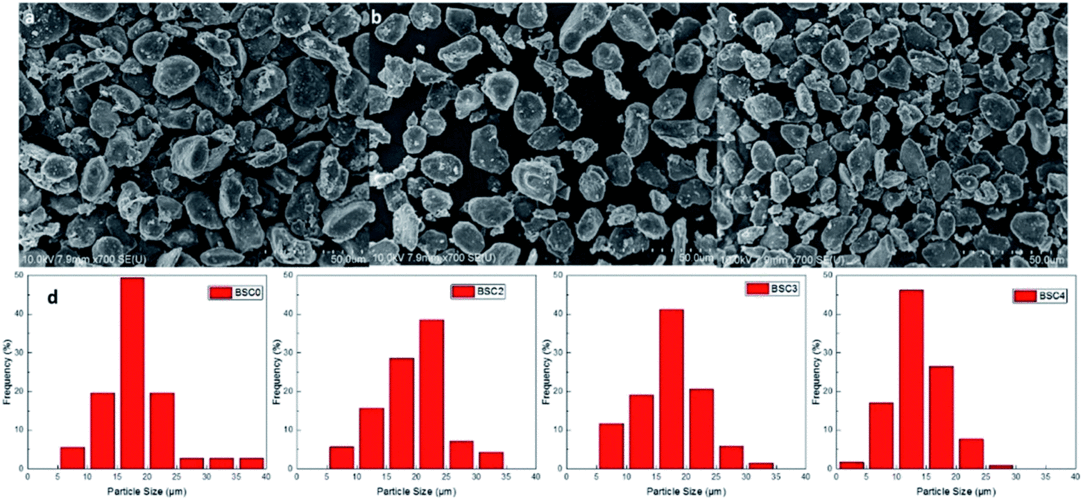
The best starting point for green silicon carbide powder 1000# in non-stick coatings is a D50 around 5–8 µm with a tight distribution (D90 < 15 µm). Typical loadings run 0.5–3% by weight in the topcoat. Increase toward 5% if you need extra wear resistance, but confirm surface smoothness and release.
Practical formulation guidance
- Particle size: For “1000#” GC micro-powder, I like a median (D50) near 6 µm. It is small enough to avoid a gritty hand feel yet large enough to resist pull-out during wear.
- Distribution: A narrow PSD prevents large particles from creating surface defects. Ask your supplier for D10/D50/D90 and sieve residue data.
- Loading:
- 0.5–1.0%: Light reinforcement, minimal change in feel, suitable for smooth high-gloss finishes.
- 1.0–3.0%: Balanced solution for cookware topcoats; noticeable abrasion gains with good release.
- 3.0–5.0%: Maximum reinforcement for heavy-use or commercial cookware; test release and surface profile carefully.
- Surface treatment: If your binder is silicone or fluoropolymer, a silane-treated SiC powder can further improve binder wetting and adhesion.
- Placement: Add green silicon carbide powder 1000# to the outermost layer for the strongest effect on wear and heat performance. Keep the midcoat/basecoat for color and structure.
Will green silicon carbide powder 1000# affect food safety and compliance?
End users care about safety as much as performance. Coatings must pass regulations, and labels must be correct. The good news is that properly specified GC micro-powder is inert and does not introduce heavy metals or volatile hazards into your system.
Green silicon carbide powder 1000# is an inert ceramic material with excellent durability, weatherability, and chemical resistance.[^3] When sourced with low free crystalline silica and clean chemistry, it is not classified as a carcinogen and does not require special hazard labeling for finished coatings. Always confirm REACH and RoHS compliance with your supplier.
Compliance notes and best practices
- Inertness: SiC does not hydrolyze or leach under typical kitchen conditions. It supports stable, long-life coatings.
- Free crystalline silica: Reputable green SiC powder for coatings has free SiO2 content below hazardous thresholds. I always request third-party test data on crystalline silica content.
- Heavy metals: Confirm absence of Pb, Cd, Hg, Cr(VI) per RoHS and any regional cookware standards.
- REACH/TSCA: Ask for registration status and SVHC declarations.
- Dust safety: As with all mineral powders, handle the raw powder with dust control and PPE during production. The risk in the finished, fully cured film is minimal.
- Food contact: The binder system and full coating must meet the applicable LFGB, FDA, or GB standards. SiC does not interfere with migration limits when properly bound.
How does green silicon carbide powder 1000# compare with other reinforcement fillers?
Many formulators try alumina, silica, mica, or boron nitride. Each has benefits, but not all survive high heat or provide the same hardness boost. Comparing on hardness, heat, feel, and gloss helps you choose the right reinforcement.
Green silicon carbide powder 1000# is harder than alumina and silica, more heat-stable than organic options, and less costly than boron nitride. It delivers a strong abrasion upgrade at modest loadings and keeps the surface smooth when you choose the right particle size.
Side-by-side comparison
| Filler | Mohs Hardness | Heat Stability (°C) | Typical Loading | Impact on Gloss | Cost Level | Notes |
| Green SiC 1000# | 9–9.5 | >1000 | 0.5–3% | Low–Moderate | $$ | Best abrasion boost; fine grades keep smoothness |
| Fused Alumina (Al2O3) | 8–9 | >1000 | 1–5% | Moderate | $ | Good, but slightly lower hardness vs SiC |
| Silica (SiO2) | 6–7 | >1000 | 1–5% | Low | $ | Improves rheology, limited abrasion improvement |
| Mica | 2–3 | ~800–1000 | 1–5% | Can lower gloss | $ | Plate-like; more barrier than abrasion |
| Boron Nitride (h-BN) | ~2 | >900 | 0.5–2% | Low | $$$ | Great slip/thermal, limited hardness increase |
If you need to stop back-sticking in silicone coatings at higher temperatures, the extra hardness of green silicon carbide powder 1000# becomes decisive.
Frequently Asked Questions
What does “1000#” mean in green silicon carbide powder 1000#?
“1000#” refers to a fine micro-powder cut suitable for smooth coatings. In practice, it targets a median particle size around 5–8 µm with a tight distribution. This size reinforces the topcoat without creating a gritty feel, making it ideal for non-stick cookware top layers.
Will green silicon carbide powder 1000# reduce non-stick release?
Not when optimized. Use 0.5–2% in PTFE systems and 1–3% in silicone systems, keep D50 around 5–8 µm, and control film build. This preserves surface smoothness and contact angle. Always confirm egg-release or pancake tests alongside abrasion improvements.
Can I add green silicon carbide powder 1000# to the midcoat instead of the topcoat?
You can, but the performance boost is strongest in the topcoat because that is where abrasion and heat contact occur. If you reinforce the midcoat, still include a small amount in the top layer to protect the surface from scuffing and scrubbing.
Does green silicon carbide powder 1000# change color or gloss?
SiC is green–black and can slightly lower gloss or deepen color, especially at higher loadings. Many brands appreciate the extra hiding power. If you need high gloss, use the finest 1000# cut, keep loading modest, and fine-tune pigment volume concentration.
Is green silicon carbide powder 1000# safe for food-contact cookware?
Yes, when properly specified and fully bound in a compliant coating system. SiC is an inert ceramic with low free crystalline silica and no heavy metals. Verify REACH/RoHS and regional food-contact standards with your supplier and test your final, cured coating accordingly.
Conclusion
Green silicon carbide powder 1000# is a simple, high-impact upgrade for non-stick coatings. It raises hardness, wear resistance, and heat stability, and it reduces back-sticking—especially in silicone topcoats. If you want longer-lasting PTFE or silicone finishes without losing release, trial SiC 1000# at 0.5–3%. Contact us at GREAT Abrasive for samples, PSD data, and dispersion advice tailored to your line.
[^1]: “Mechanical properties of dispersed ceramic nanoparticles in polymer …”, https://pmc.ncbi.nlm.nih.gov/articles/PMC2865024/. Tribology studies of ceramic-particle-reinforced polymer coatings report that hard fillers can reduce abrasive wear by sharing contact loads and limiting matrix damage, providing mechanistic support for the proposed role of dispersed SiC particles. Evidence role: mechanism; source type: paper. Supports: The source should show that hard ceramic fillers such as SiC can improve polymer-coating wear behavior by bearing load or reducing abrasive damage.. Scope note: Published studies may use different resin systems or test conditions than cookware topcoats, so the support is mechanistic rather than formulation-specific proof.
[^2]: “PTFE-coated non-stick cookware and toxicity concerns: a perspective”, https://pubmed.ncbi.nlm.nih.gov/28913736/. University and materials references describe silicon carbide as a refractory ceramic stable at temperatures far above common cookware-coating service temperatures, supporting the thermal-stability context for its use in coatings. Evidence role: general_support; source type: education. Supports: The source should document silicon carbide’s high-temperature ceramic stability and provide context for typical cookware coating temperatures.. Scope note: This supports the material-property comparison, not direct performance of a specific SiC-filled non-stick formulation.
[^3]: “Corrosion Characteristics of Silicon Carbide and Silicon Nitride – PMC”, https://pmc.ncbi.nlm.nih.gov/articles/PMC4907592/. Materials-science references characterize silicon carbide as a chemically resistant ceramic with high hardness and durability, supporting its general description as an inert reinforcement material. Evidence role: definition; source type: education. Supports: The source should describe silicon carbide as a chemically resistant ceramic material and summarize its durability-related properties.. Scope note: The citation supports bulk SiC properties and does not by itself establish the behavior of every powder lot or coating formulation.