P1000 black silicon carbide powder solves a common problem: how to keep diamond grinding discs cutting cleanly and consistently without inflating the bill of materials. Many shops default to green SiC, but costs quickly add up. I have found P1000 black SiC offers the right sharpness, stability, and uniformity to balance performance and cost.
P1000 black silicon carbide powder is an effective filler abrasive for diamond grinding discs because it is sharp enough to aid chip removal, thermally and chemically stable in stone-processing conditions, and available at a lower cost than green SiC. When the micro-powder is washed, overflow-classified, precipitated, and dried, it delivers uniformity that supports smooth, efficient grinding.
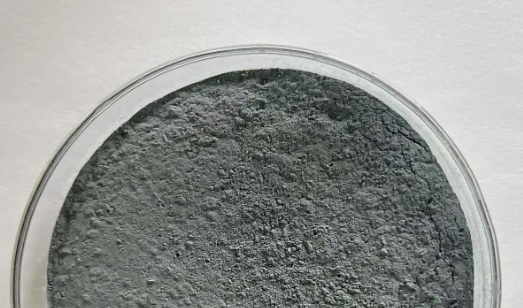
Switching from a higher-cost green SiC filler to P1000 black SiC often pays back quickly in the production of horseshoe grinding blocks, Frankfurt blocks, oxalic acid blocks, and diamond water polishing pads. Below I break down how it works, what to verify, and how procurement teams can qualify sources credibly.
How does P1000 black silicon carbide powder improve chip removal in diamond discs?
Diamond discs load and glaze when swarf cannot evacuate; productivity and finish suffer. The right auxiliary abrasive fixes this. Many buyers over-spec on hardness and overspend. I faced this once on a marble line; after trials, we found P1000 black SiC cleared chips without the cost penalty.
P1000 black silicon carbide powder improves chip evacuation by providing sharp micro-cutting edges that “open” the diamond-bond interface, reduce loading, and maintain free-cutting action. In resin or metal bonds, it acts as an auxiliary abrasive that supports the diamond’s work, stabilizes the grinding zone, and improves process consistency.
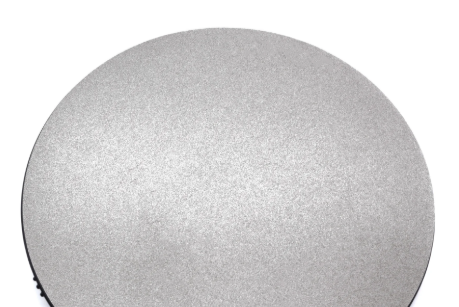
Why chip removal matters with diamond segments
- Diamond does the heavy cutting, but swarf accumulates around the segments.
- Micro abrasives like P1000 SiC keep the surface from glazing, exposing fresh diamond edges.
- This synergy reduces energy spikes and keeps grinding forces predictable.
How P1000 micro-powder helps
- Micro-cutting action: At P1000, the fine SiC particles micro-score the bond matrix, creating controlled porosity pathways for swarf and slurry.
- Surface refresh: The particles help “open” a dull surface just enough to refresh diamond exposure without gouging the stone.
- Flow of slurry: Fine SiC acts as a flow aid in the polishing slurry, improving chip transport on stone tiles and slabs.
Compatible with common stone applications
I have seen the best fit in:
- Horseshoe grinding blocks for initial calibration on stone tiles
- Frankfurt grinding blocks used on line polishers
- Oxalic acid blocks for finishing marble
- Diamond water polishing pads where filler abrasives prevent pad loading
In these products, P1000 black SiC serves as the auxiliary abrasive within resin or metal bonds or as a filler in the polishing matrix. It is not trying to replace diamond’s cutting role; it amplifies it by maintaining a clean, open interface that helps chips leave the cutting zone. This improves grinding efficiency, stabilizes cutting temperature, and helps surface uniformity.
Is P1000 black silicon carbide powder stable enough thermally and chemically?
Excess heat and chemical reactivity can spoil polishing, cause burn, or degrade bond performance. Some engineers worry that lower-cost abrasives may misbehave at temperature. In my experience, properly processed black SiC is as stable as green SiC in real production windows.
Yes. P1000 black silicon carbide powder exhibits strong thermal conductivity and chemical stability in typical stone grinding conditions. It helps limit localized heat build-up, resists reaction with common resin and metal bonds, and supports steady removal without causing burn or discoloration when paired with appropriate coolant and process parameters.
Thermal and chemical behavior in the grinding zone
- Silicon carbide has high thermal conductivity relative to many fillers, which helps spread heat and avoid hotspots.
- It maintains integrity across the temperature range experienced in stone grinding and polishing.
- It is chemically compatible with typical resin, metal, and hybrid bond systems used in diamond grinding discs and blocks.
What this means for process reliability
- Heat control: By aiding chip evacuation and distributing heat, the abrasive helps the tool run cooler. This reduces the risk of resin softening or bond smearing.
- Finish stability: Consistent micro-cutting action yields more uniform finishes on marble, granite, and engineered stone.
- Lower risk: Because it remains stable, operators can run standard coolants confidently without worrying about unexpected reactions.
As always, application specifics matter. Stone type, bond composition, coolant chemistry, and machine parameters all interact. For new setups—or if you are switching filler abrasives—run controlled trials. Our team routinely shares sample lots and test protocols so buyers can evaluate thermal signatures and surface outcomes under their exact conditions.
What does P1000 mean for black silicon carbide powder, and how do I verify grading?
Ambiguity around “P1000#” can derail sourcing. I once saw a buyer mix FEPA “P” designations with “F” microgrits and JIS codes; the PSD did not match expectations. Verification is essential to avoid under- or over-aggressive behavior on the line.
P1000 describes a fine grit classification, commonly aligned with FEPA “P” coated-abrasive nomenclature in the micro range. Buyers should request a particle size distribution (PSD) curve, not just the label, and verify D50 and distribution width against their process target using laser diffraction and sieve cross-checks.
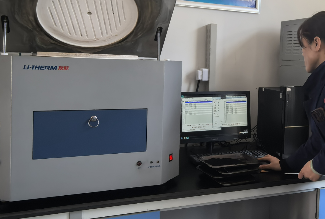
How to interpret P1000
- P1000 falls in a fine micro-powder range often used for polishing, finishing, and as a filler to keep surfaces open.
- Labels vary by region. Some suppliers use FEPA “P” (coated abrasives), while others reference “F” (bonded abrasives) or JIS codes.
- The number alone is not enough for precision work.
What to request from suppliers
- Full PSD curve with D10, D50, D90 values from laser diffraction
- Sieve check or sedimentation cross-check method
- Statement of grading standard (e.g., FEPA P-based) and test method used
- Batch COA showing PSD and key impurities
A practical approach for procurement:
- Match PSD to function: For filler/auxiliary roles in diamond segments, aim for a tight distribution that supports smooth slurry flow and micro-opening action.
- Trial matrix: Test at least two PSD bands around your current spec to validate cut rate, finish, loading behavior, and segment wear.
- Record traceability: Tie PSD data to finished-tool performance so future purchases remain on-spec.
Note: Conversion charts between FEPA, ANSI, and JIS exist, but variations in test method and distribution shape always matter. Rely on your lab data.
How does P1000 black silicon carbide powder compare to green SiC on cost and performance?
Green SiC is harder and often sharper; it is a go-to for certain critical polishing steps. However, when the abrasive’s role is auxiliary—supporting diamond rather than replacing it—black SiC frequently hits the cost-performance sweet spot.
For auxiliary filler roles in diamond grinding discs, P1000 black silicon carbide powder typically delivers comparable chip control and surface uniformity at a lower unit cost than green SiC. Green SiC may still be preferred for specific high-end finishing, but black SiC reduces TCO in many stone tile and block applications.
Cost–performance perspective
- Performance: Black SiC is sufficiently sharp for chip evacuation and micro-opening.
- Stability: Both black and green SiC offer good thermal/chemical stability in stone processing.
- Cost: Black SiC is generally more economical, improving BOM and margin stability.
Comparison overview:
- Hardness and friability: Green > Black
- Chip evacuation as filler: Black ≈ Green in many diamond-supported roles
- Unit price and availability: Black > Green (advantage)
- Final polish on very sensitive stones: Often green retains an edge
Which production steps ensure P1000 black silicon carbide powder uniformity and smoothness?
Poorly processed micro-powder causes inconsistent finish, unpredictable loading, and line downtime. I learned this the hard way when a batch with excess fines spiked current draw on a polisher. Process discipline at the powder supplier is key.
Washing, overflow classification, precipitation, and controlled drying help P1000 black silicon carbide powder achieve clean surfaces, tight PSD, and stable flow. These steps remove dust, adjust fines, and stabilize moisture content, which supports uniform grinding behavior and smoother finishes.
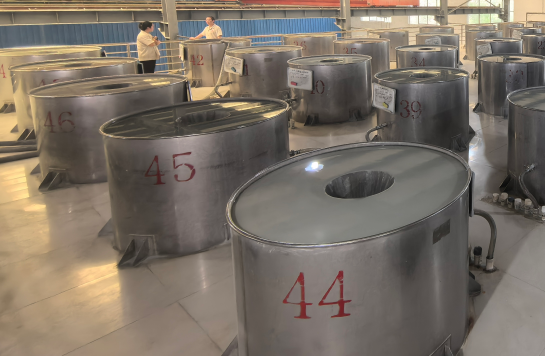
What the steps do and why they matter
- Washing: Removes soluble residues, ultrafines, and surface contaminants that can cause foaming or loading.
- Overflow classification: Uses hydraulic or air classification to trim the fine tail and tighten PSD.
- Precipitation/settling: Further refines cut points for a consistent mid-curve (D50) and narrower distribution.
- Drying: Stabilizes moisture content for predictable flow, dosing, and mixing in resin or metal bonds.
Additional quality controls to look for:
- Magnetic removal: Lowers ferromagnetic impurities that can scratch or contaminate high-finish surfaces.
- COA parameters: PSD (D10/D50/D90), bulk/tap density, magnetic content, loss on ignition/moisture, and basic chemistry.
- Clean packaging: Dust-controlled, moisture-barrier sacks (e.g., 25 kg) with palletization and lot traceability.
At GREAT Abrasive, we run washing, overflow, precipitation, and drying as standard for P1000-grade micro powders, followed by QC checks on PSD, chemistry, bulk density, and magnetic content. We share sampling plans and data so buyers can confirm batch-to-batch consistency. Regardless of supplier, insist on documentation and verify with your incoming inspection.
How should procurement qualify a supplier for P1000 black silicon carbide powder?
Choosing the right powder is only half the battle. A supplier’s process control and documentation determine whether performance stays stable as volumes scale. I encourage teams to treat abrasives like any critical raw material: qualify, monitor, and audit.
Qualify suppliers by auditing PSD controls, impurity management, and batch consistency; verifying COAs against your lab data; and running pilot lots through production tools. Request process transparency on washing, overflow, precipitation, and drying, and establish change-notice protocols for long-term reliability.
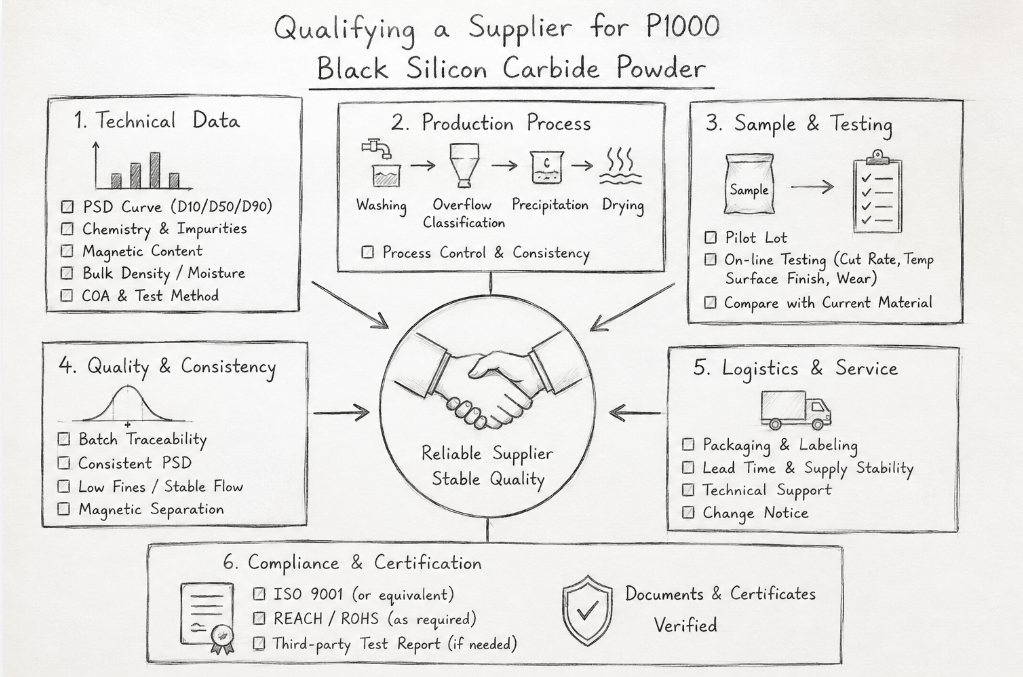
Practical qualification checklist
- Technical data pack:
- PSD curves with D10/D50/D90
- Statement of grading (e.g., FEPA P-based) and test methods
- Chemistry (SiC content, key impurities), magnetic content, density
- Moisture/LOI and cleanliness notes
- Process visibility:
- Confirmation of washing, overflow classification, precipitation, drying
- Magnetic separation details
- In-process sampling frequency and acceptance criteria
- Trial and validation:
- Sample agreements and pilot-lot quantities
- On-line tests measuring current draw, part temperature, surface Ra/Rz, and disc wear
- Side-by-side trials vs. incumbent green SiC where relevant
- Quality and logistics:
- Batch traceability and labeling
- Packaging specs (liners, bag type, pallet configuration)
- Lead time, buffer stock options, and change control
Certifications and compliance:
- Treat ISO 9001 or similar as process documentation, not performance guarantees. Verify with your tests.
- Ask for REACH/ROHS statements if your region requires them.
- For critical applications, request third-party lab verification of PSD and magnetic content.
As a supplier, we prioritize stable grading and consistent delivery. But I still advise customers to run their own acceptance tests. It keeps both sides aligned and reduces risk in the long term.
Frequently Asked Questions
Can P1000 black silicon carbide powder replace green SiC in all polishing steps?
Not always. For ultra-fine, high-gloss finishing on sensitive stones, green SiC can maintain a slight edge due to hardness and friability. However, in many diamond-supported roles—such as filler in grinding blocks—P1000 black SiC provides similar functional results at a lower cost.
What PSD parameters should I prioritize when sourcing P1000 black SiC?
Focus on a stable D50 aligned to your process and a narrow D10–D90 spread to avoid excess fines or coarse tails. Ask for method details (laser diffraction settings) and verify with your lab. A consistent distribution influences cut rate, finish, and tool life more than the label alone.
Will P1000 black SiC cause overheating in diamond water polishing pads?
When processed correctly and combined with appropriate coolant flow, P1000 black SiC helps reduce localized heating by maintaining chip flow. Silicon carbide’s thermal conductivity also supports heat dispersion. Validate on your equipment, since bond type, speed, and pressure affect temperature.
Which applications best suit P1000 black SiC as a filler abrasive?
I see strong results in horseshoe grinding blocks, Frankfurt blocks, oxalic acid blocks for marble finishing, and diamond water polishing pads. In these, P1000 black SiC supports chip evacuation and surface refresh without driving up the bill of materials like green SiC can.
How can I minimize lot-to-lot variability with P1000 black SiC?
Implement a supplier qualification plan, require PSD curves with each lot, and set acceptance limits for D10/D50/D90, moisture, magnetic content, and bulk density. Use the same incoming test methods each time, and tie results to on-line performance for traceability and continual improvement.
Conclusion
For diamond grinding discs and stone-processing blocks, P1000 black silicon carbide powder delivers the right balance of sharpness, stability, and cost. It keeps the grinding interface open, supports smooth finishes, and maintains process temperature—all at a lower unit cost than green SiC in many filler roles. If you want samples, COAs, or a pilot-lot plan, contact GREAT Abrasive. I am happy to help you qualify the material and de-risk your switch.