Introduction to Black Silicon Carbide F150
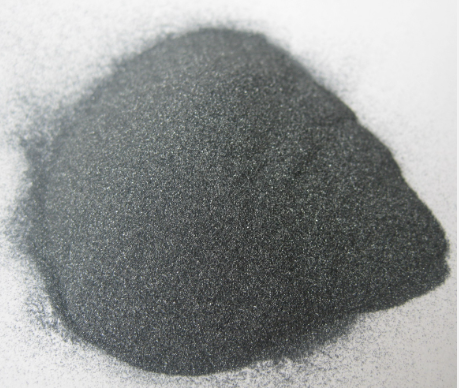
Black Silicon Carbide F150 is a medium-fine abrasive grit widely used in industrial grinding, blasting, and surface finishing applications. Produced by smelting quartz sand and petroleum coke in an electric resistance furnace at temperatures above 2300 °C, it forms hard crystalline SiC particles with sharp edges and excellent cutting ability.
With a hardness of around Mohs 9.2–9.5, black silicon carbide is one of the hardest industrial abrasives, surpassed only by materials such as diamond and boron carbide. Its sharp angular grains make it highly efficient for material removal, surface preparation, and precision finishing.
Among FEPA macro grits, F150 has an average particle size of approximately 82 μm, making it suitable for semi-fine grinding and controlled surface treatment.
Because of these characteristics, Black Silicon Carbide F150 is widely used in industries such as:
Abrasive tools manufacturing
Metal and stone processing
Precision surface preparation
Electronics and semiconductor components
Key Physical and Chemical Properties of Black Silicon Carbide F150
Understanding the technical characteristics of Black Silicon Carbide F150 is essential for industrial buyers selecting abrasive materials.
Typical Physical Properties
| Property | Typical Value |
| Hardness | Mohs 9.2 |
| Melting point | ≈ 2300 °C |
| Specific gravity | 3.2 – 3.45 g/cm³ |
| Bulk density | 1.3 – 1.6 g/cm³ |
| Particle shape | Angular / Hexagonal |
| Thermal conductivity | 60 – 200 W/m·K |
| Max working temperature | Up to 1900 °C |
These properties provide excellent grinding efficiency, high wear resistance, and strong thermal stability, making silicon carbide ideal for demanding industrial environments.
Typical Chemical Composition
| Component | Typical Content |
| SiC | ≥ 98% |
| SiO₂ | ≤ 1% |
| Fe₂O₃ | ≤ 0.3% |
| Free Carbon | ≤ 0.3% |
| Magnetic Content | ≤ 0.02% |
High SiC purity ensures consistent cutting performance and low contamination, which is particularly important for precision grinding and electronics applications
What Makes F150 Grit Unique?
Different FEPA grit sizes serve different industrial purposes. F150 sits in the transition range between medium grinding and fine finishing.
| Grit Size | Average Particle Size | Typical Application |
| F100 | ~129 µm | Aggressive grinding |
| F120 | ~109 µm | Medium grinding |
| F150 | ~82 µm | Semi-fine grinding / surface finishing |
| F180 | ~69 µm | Fine grinding |
| F220 | ~58 µm | Precision finishing |
Because of its balanced cutting ability and surface control, F150 is widely used when manufacturers need efficient material removal without overly rough surface damage.
Major Applications of Black Silicon Carbide F150
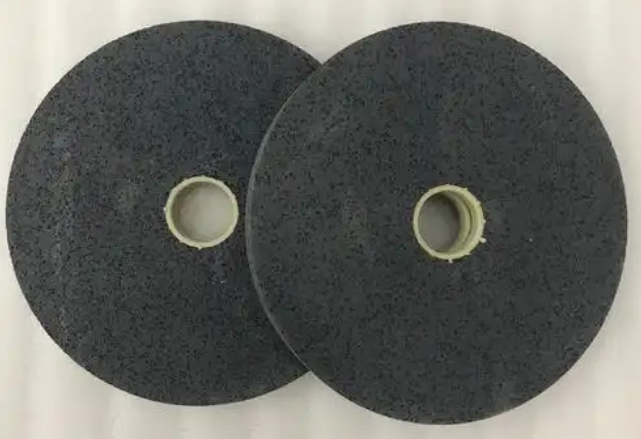
1.Grinding Wheels and Abrasive Tools
Black Silicon Carbide F150 is widely used in:
Vitrified grinding wheels
Resin bonded grinding wheels
Fiber grinding discs
Cup grinding wheels
These tools are commonly applied in the processing of:
Stone (granite, marble)
Cast iron
Non-ferrous metals
Ceramic materials
The sharp angular grains allow fast cutting while maintaining stable grinding performance.
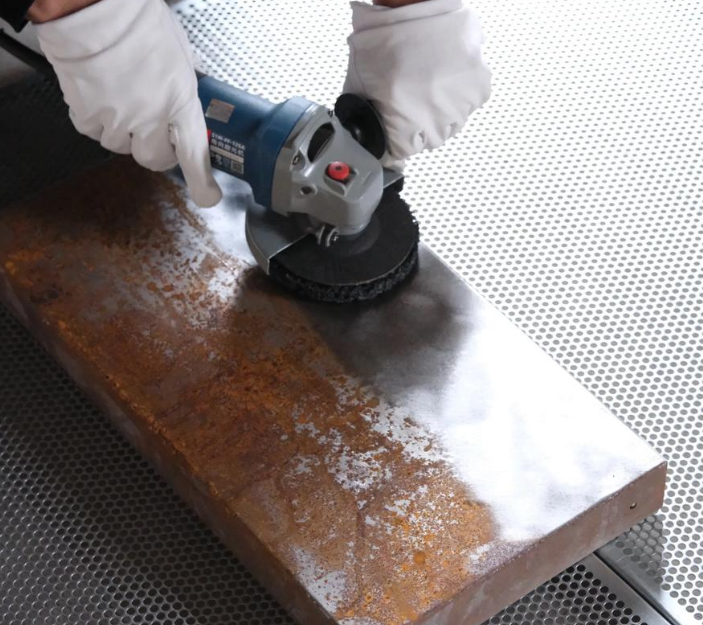
2.Abrasive Blasting and Surface Preparation
F150 grit is frequently used as a blasting medium for precision surface treatment.
Typical blasting applications include:
Stainless steel surface cleaning
Rust and oxide removal
Surface preparation before coating or plating
Semiconductor component cleaning
Compared with coarser grits, F150 offers better control of surface roughness and reduced substrate damage.
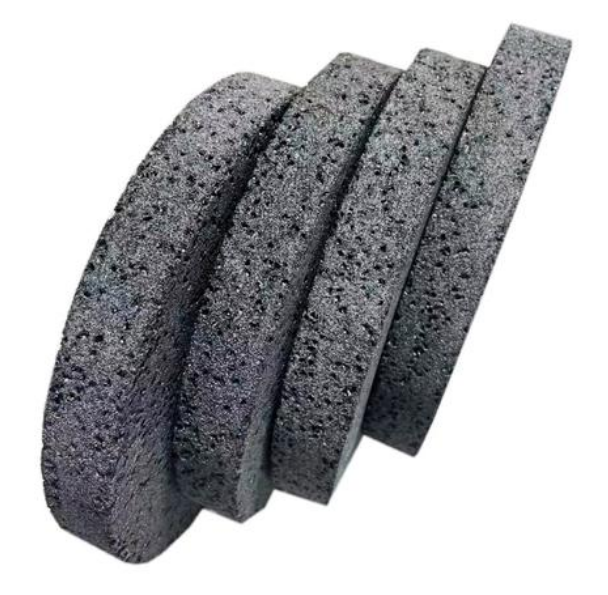
3.Stone Processing and Marble Grinding
In stone fabrication, Black Silicon Carbide F150 is often used for:
Marble grinding wheels
Granite surface finishing
Decorative stone processing
Stone engraving and polishing
Its hardness and brittleness allow grains to fracture during grinding, continuously exposing new sharp cutting edges.
This self-sharpening effect improves grinding efficiency and surface quality.
4.Ceramic and Glass Processing
Black Silicon Carbide abrasives are widely used in ceramic and glass manufacturing.
Common uses include:
Ceramic surface grinding
Electronic ceramic finishing
Glass artwork polishing
Optical component processing
The material’s chemical stability and thermal shock resistance make it particularly suitable for high-temperature industrial environments.
Advantages of Black Silicon Carbide F150
Industrial buyers often choose F150 because it provides an excellent balance between cutting speed and surface quality.
Key Advantages
| Advantage | Description |
| High hardness | Efficient material removal |
| Sharp grain structure | Excellent cutting ability |
| High thermal resistance | Suitable for high-speed grinding |
| Chemical stability | Resistant to oxidation and corrosion |
| Consistent particle distribution | Stable grinding performance |
These properties make Black Silicon Carbide a cost-effective abrasive for large-scale industrial applications.
How to Choose the Right Black Silicon Carbide Supplier
For B2B procurement, quality consistency is often more important than price alone.
Professional buyers typically evaluate suppliers based on:
1.Particle Size Distribution (PSD)
Consistent PSD ensures stable grinding performance and predictable results.
2.SiC Purity
Higher SiC content (≥98%) ensures stronger cutting ability and fewer impurities.
3.Magnetic Content
Low magnetic content is essential for precision industries such as electronics.
4.Production Experience
Suppliers with long-term experience in abrasives manufacturing generally provide more stable quality control.
5.Packaging and Logistics
| Packaging Type | Typical Weight |
| Paper bags + pallet | 25 kg |
| Woven bags | 25 kg |
| Big bags | 1 MT |
Industrial suppliers typically ship by container, bulk bag, or palletized packaging depending on customer requirements.
Conclusion
Black Silicon Carbide F150 is a high-performance abrasive material widely used in grinding wheels, abrasive blasting, stone processing, and ceramic finishing.
Its combination of high hardness, thermal stability, sharp grain structure, and consistent particle distribution makes it an ideal solution for industries requiring efficient grinding and controlled surface finishing.
For global buyers and procurement managers, choosing a supplier that offers stable particle size distribution, high SiC purity, and reliable logistics support is critical to ensuring long-term production efficiency and product quality.
Why Does This Issue Often Confuse Industrial Buyers?
For many procurement teams, selecting the correct abrasive grit is not always straightforward. Even though Black Silicon Carbide F150 appears to be a standard specification, different suppliers may deliver significantly different performance results.
The main challenge lies in several factors:
Inconsistent particle size distribution
Variations in SiC purity
Differences in crushing and shaping processes
Equipment calibration differences between manufacturers
As a result, buyers sometimes receive materials that technically meet the nominal grit size but perform very differently in real production environments.
Common Misconceptions in the Market
Several misunderstandings frequently appear in the abrasive materials market.
Misconception 1: All F150 materials are the same
Many buyers assume that F150 from different suppliers will deliver identical results. In reality, production methods and classification accuracy greatly influence performance.
Misconception 2: Higher purity always means better grinding
While purity is important, particle shape and size distribution often have an even larger impact on grinding efficiency.
Misconception 3: Lower price equals better cost efficiency
Lower-cost abrasives may lead to faster tool wear, unstable grinding, or inconsistent surfaces, which ultimately increases total production costs.
Technical and Production Perspective
From a manufacturing perspective, the performance of Black Silicon Carbide F150 depends heavily on several production factors.
Key Technical Factors
| Production Factor | Impact on Performance |
| Crushing technology | Determines grain sharpness |
| Air classification | Controls particle size distribution |
| Magnetic separation | Reduces metal contamination |
| Screening accuracy | Ensures FEPA standard compliance |
Advanced classification systems allow manufacturers to maintain tight PSD control, which is critical for stable grinding performance.
Advantages and Disadvantages of Different Solutions
Industrial buyers often compare multiple abrasive options before making a purchasing decision.
| Abrasive Type | Advantages | Limitations |
| Black Silicon Carbide | High hardness, sharp grains, efficient grinding | Slightly more brittle |
| Brown Fused Alumina | Durable and tough | Lower cutting efficiency |
| Green Silicon Carbide | Higher purity, sharper grains | Higher cost |
For many industrial grinding applications, Black Silicon Carbide F150 offers the best balance between cost and performance.
How We Control and Solve These Issues
Professional abrasive manufacturers implement several quality control steps to ensure consistent product performance.
Typical control measures include:
Strict raw material selection
Multi-stage crushing and shaping
Precise air classification systems
Continuous particle size testing
Magnetic separation to remove impurities
These processes ensure that each batch of Black Silicon Carbide F150 maintains consistent particle distribution and stable grinding behavior.
Final
If you are sourcing Black Silicon Carbide F150 for grinding wheels, blasting media, or surface finishing, choosing a stable and experienced supplier is essential.
Working with a reliable manufacturer ensures:
Consistent particle size distribution
High SiC purity
Stable batch quality
Reliable international logistics
If you would like technical specifications, samples, or a quotation for Black Silicon Carbide F150, feel free to contact our team. We will be happy to support your procurement process and help you select the most suitable abrasive solution for your application.