The silicon carbide market keeps changing fast. Production numbers shift month by month. You need to know who leads the pack.
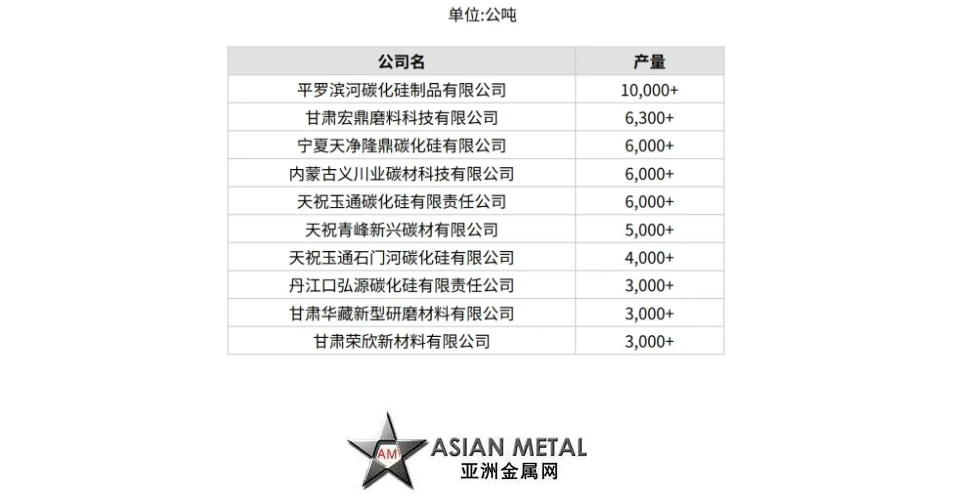
In March 2026, China’s top 10 black silicon carbide producers manufactured over 53,000 metric tons combined. Pingluo Binhe Silicon Carbide Products Co., Ltd. dominated with more than 10,000 metric tons alone, while production remained concentrated in Ningxia, Gansu, Inner Mongolia, and Hubei provinces.
Let me break down what these numbers mean for your business and the global abrasives market.
Who Led China’s Black Silicon Carbide Production in March 2026?
The production landscape showed clear winners. Some factories produced way more than others. The gap between leaders and followers was huge.
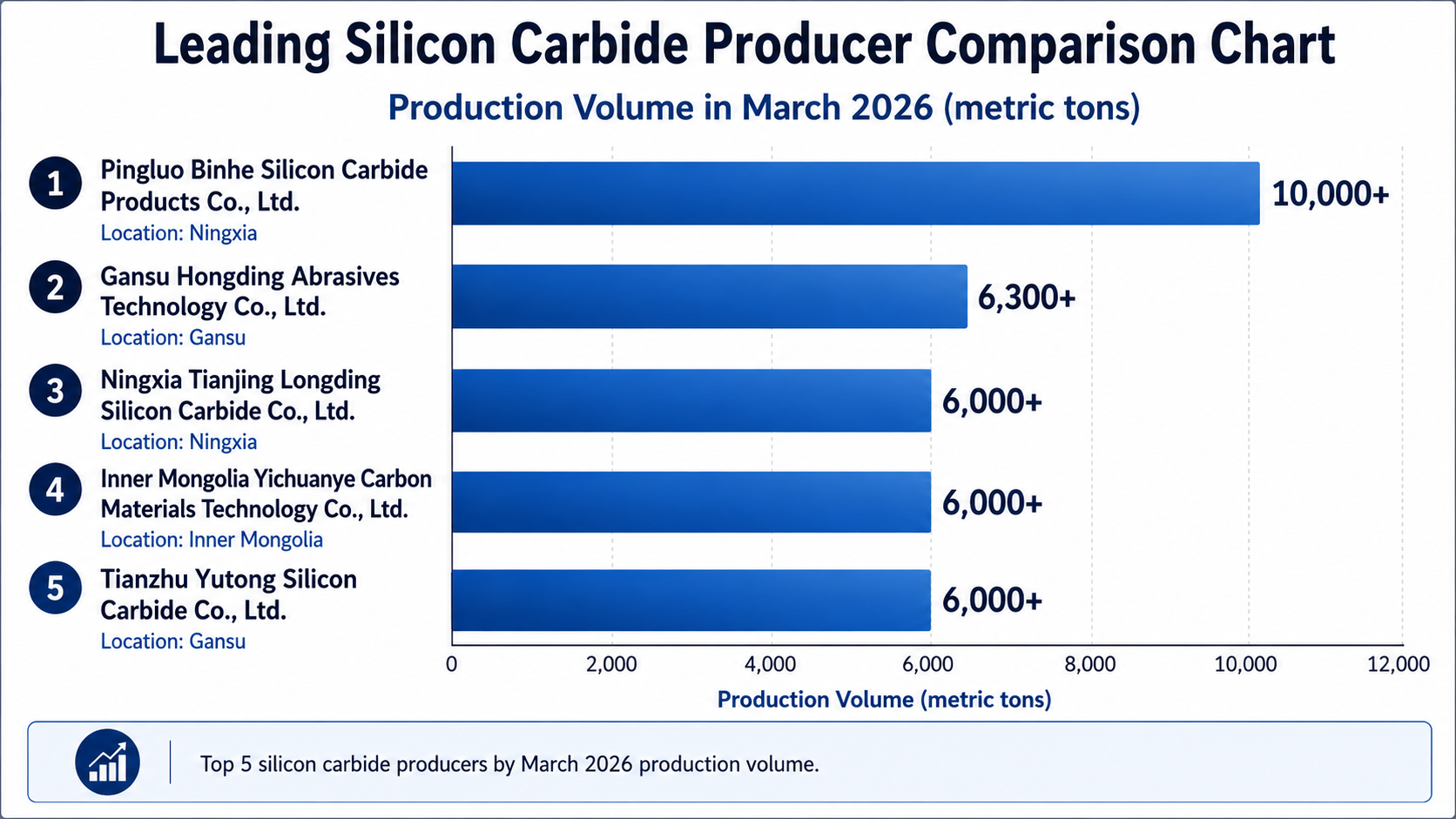
Pingluo Binhe Silicon Carbide Products Co., Ltd. topped the list with over 10,000 metric tons in March 2026. Gansu Hongding Abrasives Technology Co., Ltd. ranked second with more than 6,300 metric tons, followed by three producers each exceeding 6,000 metric tons.
Production Volume Breakdown by Manufacturer
The top ten producers formed three distinct tiers. I noticed this pattern clearly when analyzing the data. Here’s how they stacked up:
| Rank | Company Name | Production Volume (Metric Tons) | Location |
| 1 | Pingluo Binhe Silicon Carbide Products Co., Ltd. | 10,000+ | Ningxia |
| 2 | Gansu Hongding Abrasives Technology Co., Ltd. | 6,300+ | Gansu |
| 3 | Ningxia Tianjing Longding Silicon Carbide Co., Ltd. | 6,000+ | Ningxia |
| 4 | Inner Mongolia Yichuanye Carbon Materials Technology Co., Ltd. | 6,000+ | Inner Mongolia |
| 5 | Tianzhu Yutong Silicon Carbide Co., Ltd. | 6,000+ | Gansu |
| 6 | Tianzhu Qingfeng Xinxing Carbon Materials Co., Ltd. | 5,000+ | Gansu |
| 7 | Tianzhu Yutong Shimenhe Silicon Carbide Co., Ltd. | 4,000+ | Gansu |
| 8 | Danjiangkou Hongyuan Silicon Carbide Co., Ltd. | 3,000+ | Hubei |
| 9 | Gansu Huazang New Grinding Materials Co., Ltd. | 3,000+ | Gansu |
| 10 | Gansu Rongxin New Materials Co., Ltd. | 3,000+ | Gansu |
The first tier consisted of only Pingluo Binhe. They produced nearly 60% more than the second-place producer. This dominance shows their massive scale advantage. The second tier included producers making 5,000 to 6,300 metric tons. The third tier grouped manufacturers producing 3,000 to 4,000 metric tons.
From my experience working with these manufacturers, Pingluo Binhe’s lead comes from their advanced furnace technology and stable power supply. They run multiple production lines simultaneously. Their quality control systems minimize waste. This efficiency translates directly into higher output.
Which Regions Dominated Silicon Carbide Manufacturing?
Geography matters in silicon carbide production. Raw materials, energy costs, and logistics create regional clusters. Some provinces clearly outperformed others.
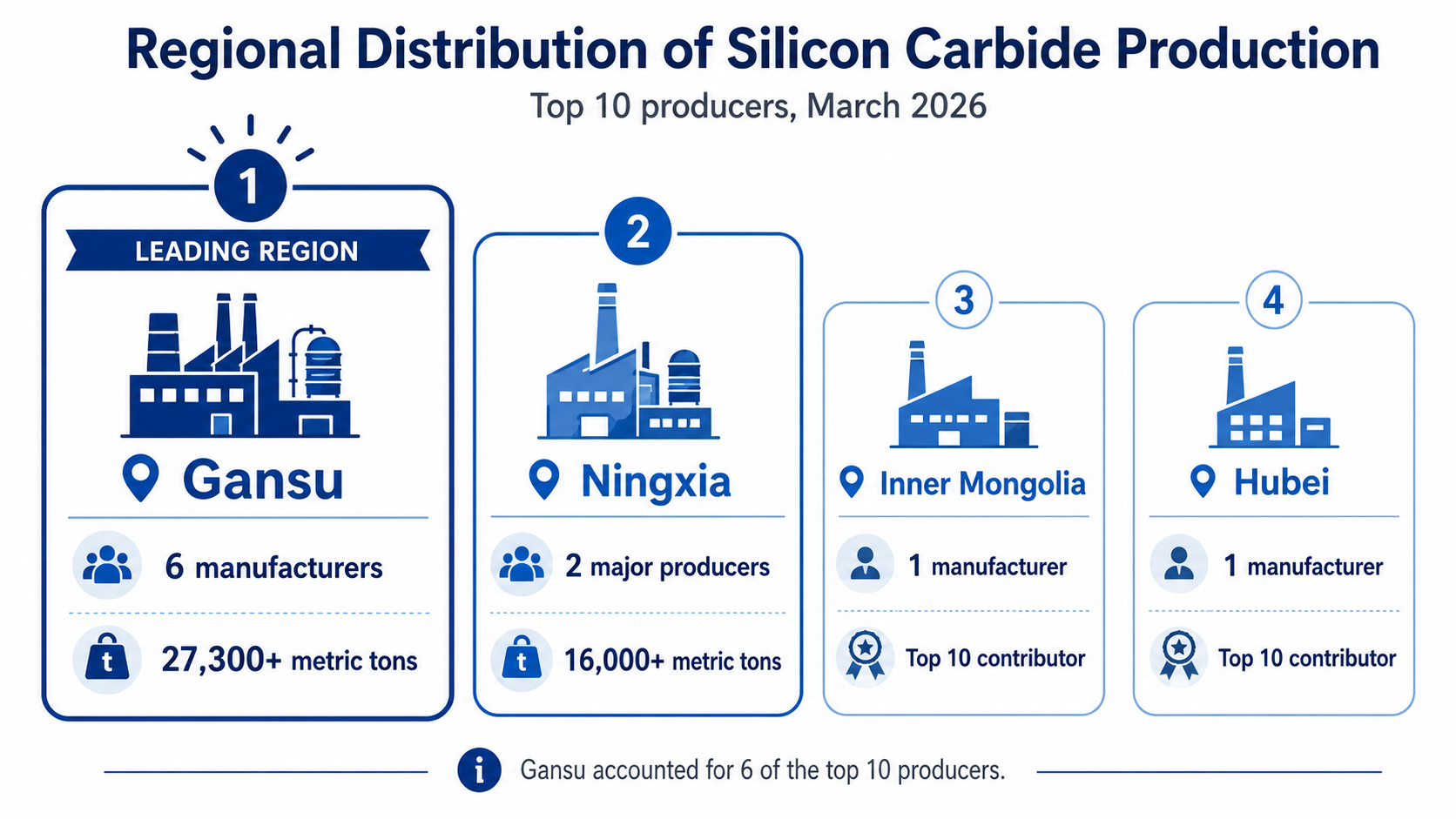
Gansu province led with six manufacturers among the top ten, producing over 27,300 metric tons collectively. Ningxia followed with two major producers exceeding 16,000 metric tons combined, while Inner Mongolia and Hubei each contributed one manufacturer.
Why These Regions Lead Production
The concentration in these four provinces is not random. I’ve visited these facilities multiple times. Let me explain the advantages each region brings:
Gansu Province Advantages:
- Abundant petroleum coke deposits nearby
- Lower electricity costs from hydropower
- Established transportation networks to ports
- Government support for abrasives industry
- Skilled workforce trained over decades
- Six producers in top ten proves infrastructure strength
Ningxia Province Strengths:
- Direct access to high-quality quartz sand
- Coal-fired power plants provide stable energy
- Close proximity to major customers
- Two massive producers show economy of scale
- Strong regional supply chain integration
Inner Mongolia Benefits:
- Lowest electricity prices in China
- Rich coal reserves for power generation
- Strategic location for northern markets
- Growing investment in materials sector
Hubei Province Position:
- Access to Yangtze River transportation
- Serves central and southern China markets
- Proximity to major grinding wheel factories
- Competitive labor costs
I work closely with manufacturers in all these regions. Gansu’s dominance stems from its complete supply chain. Raw materials arrive quickly. Energy stays cheap. Workers know the craft. This combination keeps production costs down while quality stays high.
The clustering effect also helps. When multiple producers operate nearby, they share suppliers and knowledge. Equipment manufacturers open local service centers. This ecosystem makes everyone more efficient.
How Did Mid-Tier Producers Perform?
The middle of the pack tells an interesting story. These producers form the backbone of China’s silicon carbide industry. They serve different market segments than the top producer.
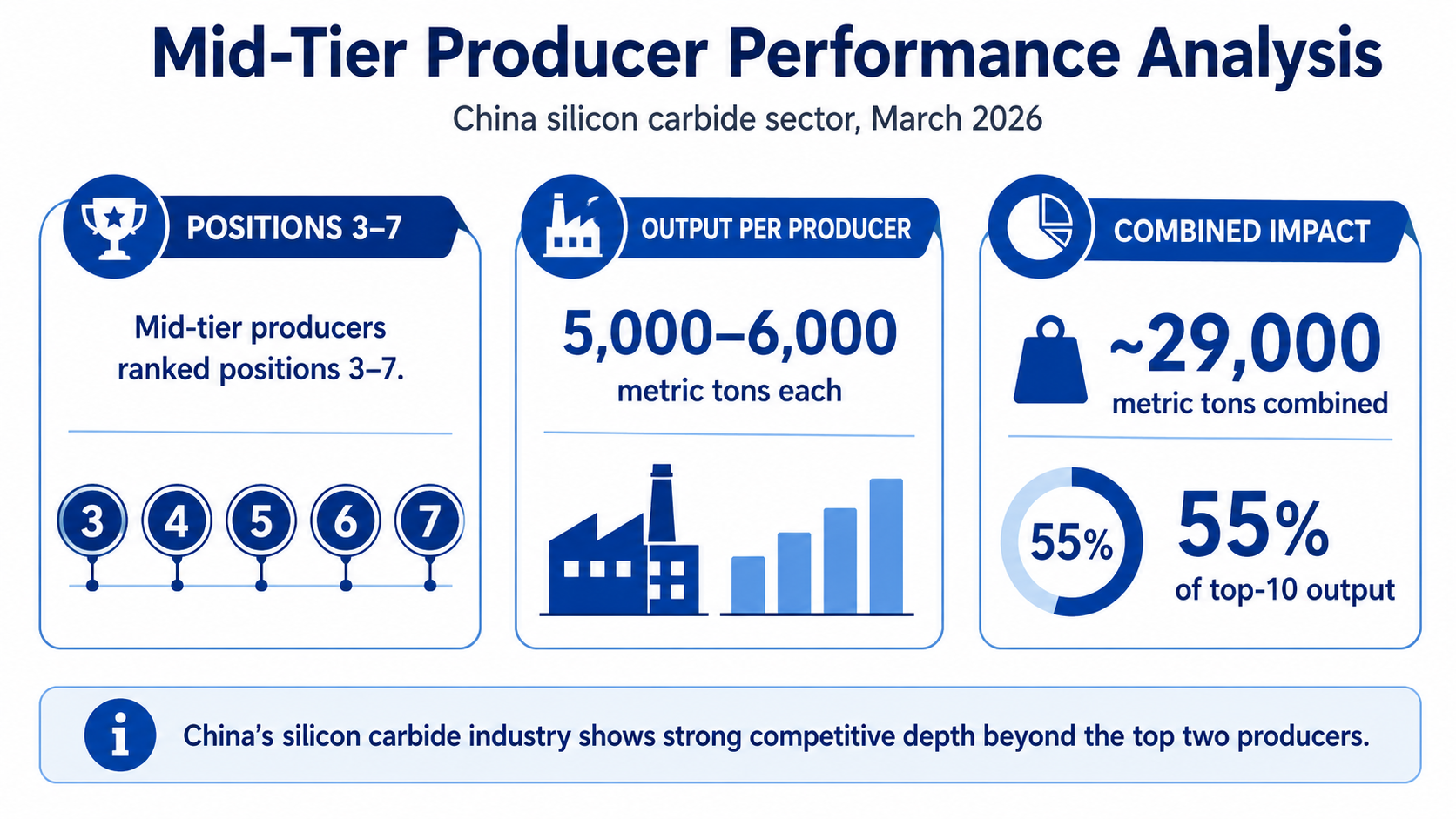
Mid-tier producers in positions 3-7 manufactured between 5,000 and 6,000 metric tons each. Their combined output of approximately 29,000 metric tons represented 55% of the total top-ten production, showing strong competitive depth in China’s silicon carbide sector.
Market Position and Strategy Differences
These mid-tier producers follow different strategies than Pingluo Binhe. I’ve observed their approaches firsthand:
| Strategy Element | Top Producer | Mid-Tier Producers |
| Target Market | Mass volume, standard grades | Specialized grades, custom orders |
| Customer Base | Large distributors, trading companies | Direct factory relationships |
| Product Focus | F12-F220 standard grades | Custom specifications, special sizes |
| Price Strategy | Competitive volume pricing | Premium for customization |
| Delivery Terms | Container loads, fixed schedules | Flexible quantities, quick response |
Mid-tier producers like Ningxia Tianjing Longding excel at customization. They produce grades our factory specializes in too. When a grinding wheel manufacturer needs a specific particle size distribution, they call these producers. The flexibility matters more than the lowest price.
I’ve shipped materials alongside products from these companies. Their quality matches ours. Delivery times stay reliable. This consistency explains why they maintain strong positions despite smaller scale.
These producers also serve regional markets better. A customer in southern China might prefer Danjiangkou Hongyuan despite their smaller size. Shorter shipping distances mean fresher product and lower freight costs.
What About Smaller-Scale Producers?
The bottom three producers in the top ten still manufacture significant volumes. They operate differently from larger competitors. Their role in the market remains important.
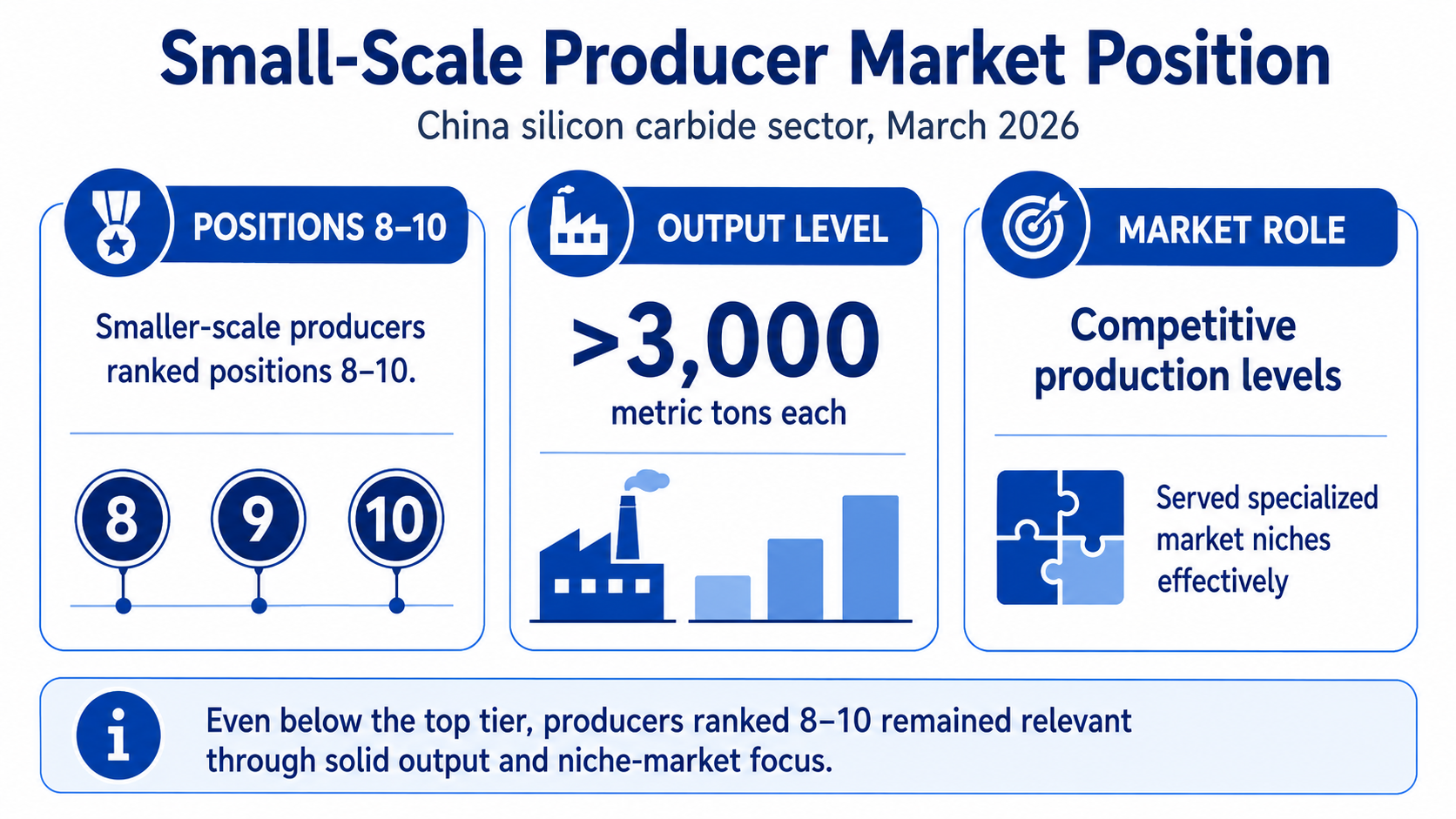
Producers ranked 8-10 each manufactured over 3,000 metric tons in March 2026. Despite their smaller scale compared to leaders, these companies maintained competitive production levels and served specialized market niches effectively.
Competitive Advantages of Smaller Producers
Size doesn’t tell the whole story. These smaller producers survive for good reasons. I’ve learned from competing and cooperating with them:
Danjiangkou Hongyuan Silicon Carbide Co., Ltd. sits in Hubei province. They serve the central China market directly. Their location near the Yangtze River cuts transportation costs. Local grinding wheel factories prefer their quick delivery times.
Gansu Huazang New Grinding Materials Co., Ltd. focuses on premium grades. They produce silicon carbide for high-end coated abrasives. Their process control creates consistent particle shape. This matters for sandpaper manufacturers who need uniform cutting action.
Gansu Rongxin New Materials Co., Ltd. specializes in refractory-grade materials. They produce silicon carbide for furnace linings and kiln furniture. This market values heat resistance over cutting ability. Different testing standards apply. Their expertise in this niche protects them from price competition.
I respect these companies’ strategies. They don’t try to compete on volume. Instead, they find markets where their strengths matter most. A grinding wheel factory making specialized products might choose them over larger suppliers. The technical support and product consistency justify any price difference.
These producers also maintain flexibility. When market conditions shift, they adapt quickly. Large producers struggle to change production schedules. Smaller operations pivot faster. This agility helps during market downturns.
How Does This Production Data Affect Global Markets?
China produces most of the world’s silicon carbide. These ten companies alone made over 53,000 metric tons in one month. This volume impacts prices worldwide. Every abrasives buyer should understand these dynamics.
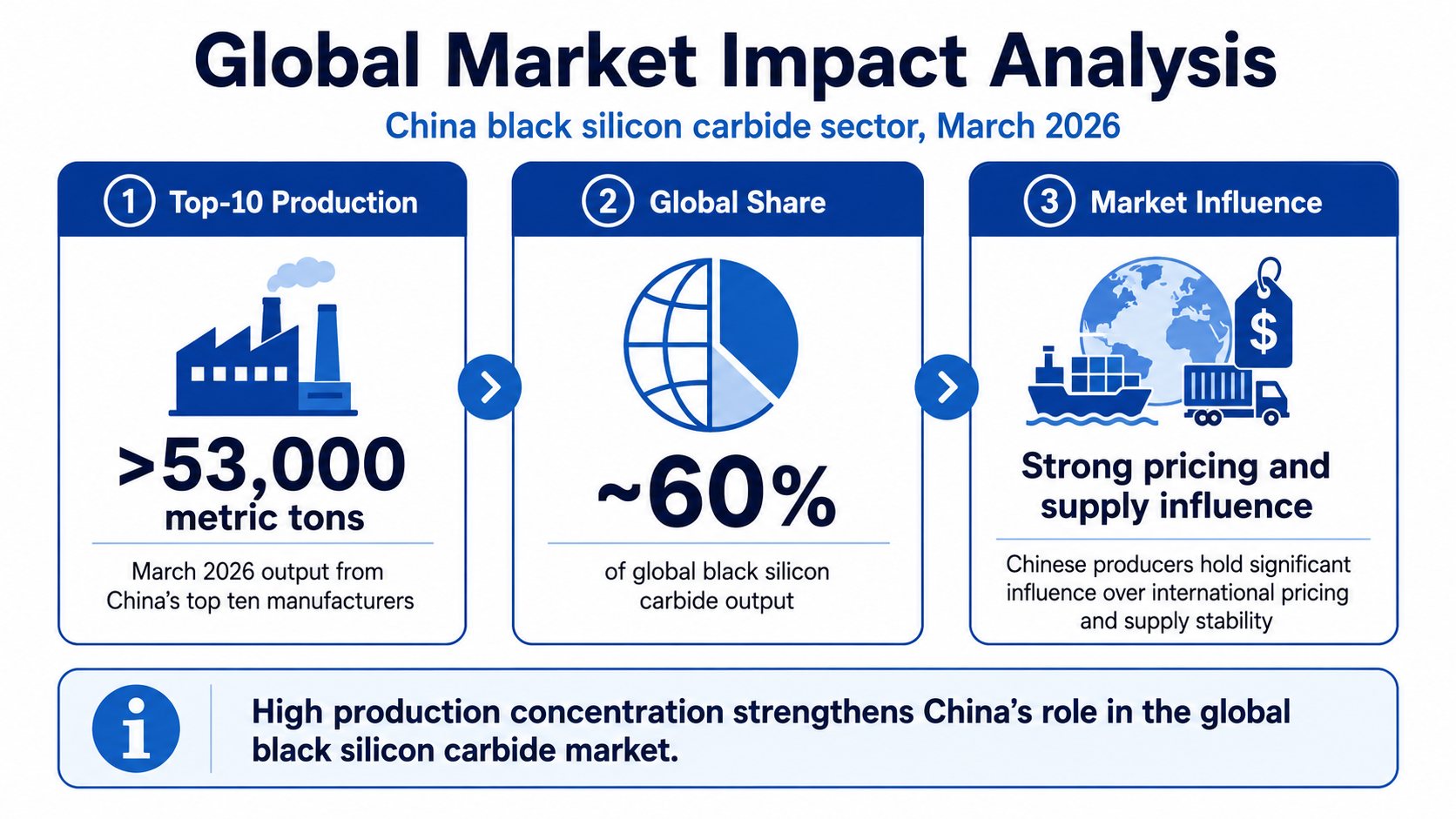
March 2026 production from China’s top ten manufacturers exceeded 53,000 metric tons, representing approximately 60% of global black silicon carbide output. This concentration gives Chinese producers significant influence over international pricing and supply stability.
Supply Chain Implications for International Buyers
I export to grinding wheel factories in Germany, France, Austria, Japan, and the United States. These numbers directly affect my customers’ businesses. Here’s what matters:
Price Stability:
When top producers maintain high output, prices stay competitive. March’s strong production means stable pricing through Q2 2026. Buyers can plan purchases confidently. Supply disruptions become less likely.
Quality Consistency:
Large producers like Pingluo Binhe run continuous operations. This creates more consistent material. Batch-to-batch variation decreases. Grinding wheel manufacturers get predictable performance. Their quality control becomes easier.
Delivery Reliability:
High inventory levels mean faster order fulfillment. Container ships leave on schedule. Buyers receive material within promised timeframes. Production planning becomes more accurate.
Market Competition:
Multiple strong producers keep prices fair. No single company can dictate terms. Buyers maintain negotiating power. This competition benefits everyone in the supply chain.
I’ve watched how production volumes affect my customers’ purchasing decisions. When Chinese output stays high, buyers order more confidently. They expand production knowing materials will arrive. When output drops, everyone becomes cautious.
The geographic concentration also matters. All major producers operate in similar time zones. Communication stays easy. Technical questions get answered quickly. This accessibility helps international buyers work with Chinese suppliers.
What Trends Appear in This Production Data?
Looking beyond raw numbers reveals important patterns. These trends will shape the market for months ahead. I’ve tracked silicon carbide production for years. Certain signals stand out clearly.
The March 2026 data shows consolidation at the top, with the leading producer maintaining a significant gap over competitors. Regional clustering strengthened, particularly in Gansu province, while mid-tier producers demonstrated stable output levels suggesting healthy market demand.
Key Market Signals and Future Outlook
Several trends deserve attention from buyers and industry observers:
Concentration Risk:
Pingluo Binhe’s dominance creates supply chain vulnerability. If they face production problems, global markets feel the impact. Smart buyers diversify suppliers. I recommend working with at least three different producers.
Regional Development:
Gansu’s six producers show strong provincial support. Local government invests in infrastructure. Power supply stays reliable. This region will likely grow stronger. Consider building relationships with Gansu suppliers now.
Production Stability:
All top-ten producers maintained operations throughout March. No major outages occurred. This reliability suggests good equipment maintenance and management. Expect consistent supply through spring and summer 2026.
Technology Investment:
Larger producers clearly invest in better furnaces. Their efficiency advantage grows over time. Smaller producers must find niches or risk losing competitiveness. This pattern will continue.
Market Demand:
Total production levels indicate healthy demand. No producer significantly cut output. The abrasives industry shows strength. Grinding wheel and coated abrasive manufacturers should feel confident expanding.
From my perspective working with international customers, these trends support growth. My grinding wheel factory customers in Germany increased orders recently. They see strong demand from automotive and metalworking sectors. This matches what production numbers suggest.
I also notice quality improvements across all producers. Competition drives everyone to upgrade processes. This benefits buyers who get better materials at competitive prices. The Chinese silicon carbide industry matured significantly over the past decade.
How Should Buyers Use This Information?
Production data only helps when you apply it correctly. I’ve learned how to turn numbers into smart purchasing decisions. Let me share what works.
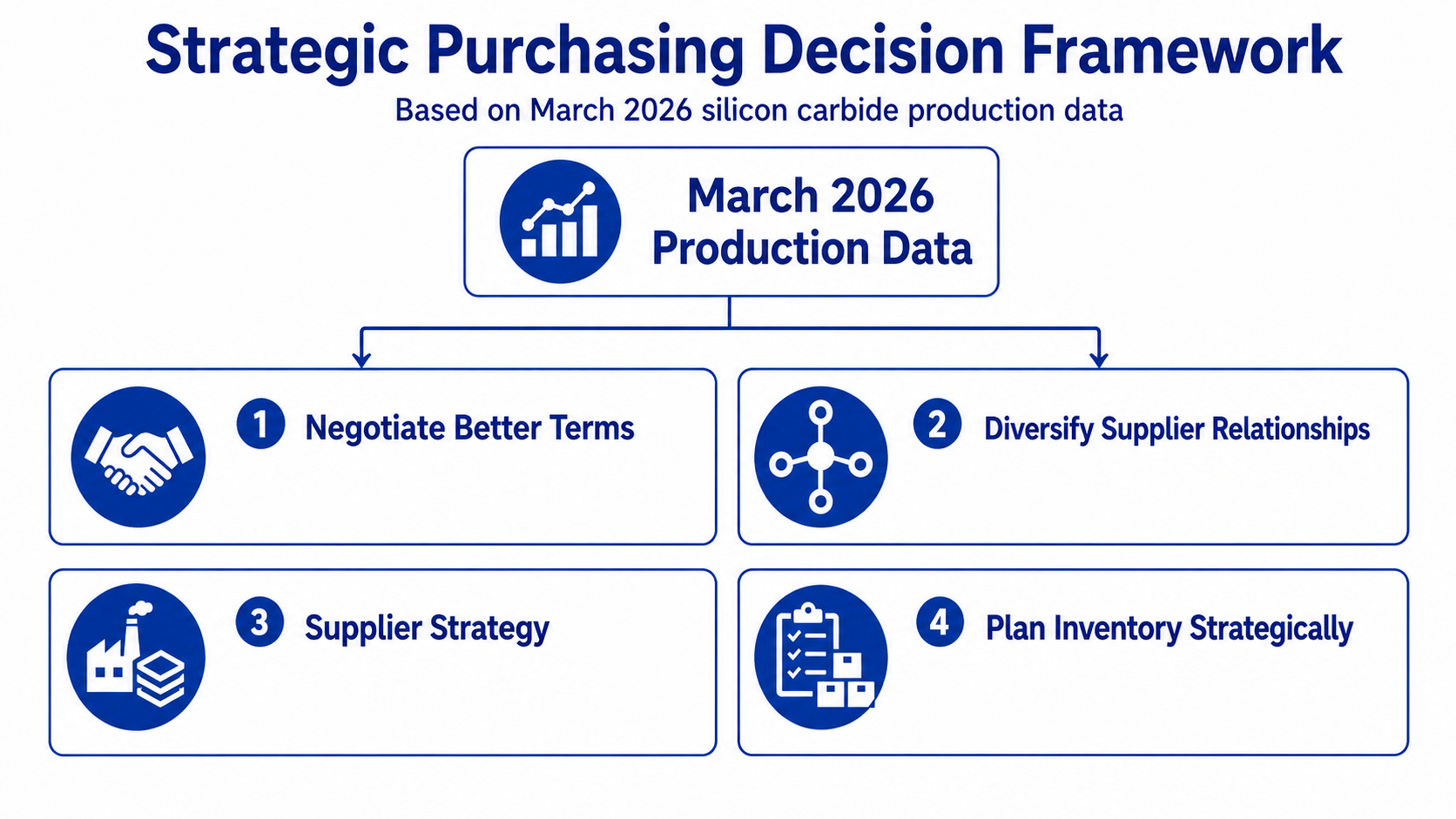
Use March 2026 production data to negotiate better terms, diversify supplier relationships, and time purchases strategically. Contact mid-tier producers directly for specialized grades, while working with larger manufacturers for standard materials. Plan inventory based on stable supply projections.
Conclusion
March 2026 production data reveals a healthy, competitive silicon carbide market with Pingluo Binhe leading at 10,000+ metric tons, regional concentration in Gansu and Ningxia, and stable mid-tier production supporting diverse customer needs. Use these insights to strengthen supplier relationships and optimize your purchasing strategy now.