High magnetic content in black silicon carbide is NOT an inherent property of the material—it is caused by contamination introduced during raw materials, smelting, and processing. This issue can be effectively controlled through proper raw material selection, equipment management, and multi-stage purification.
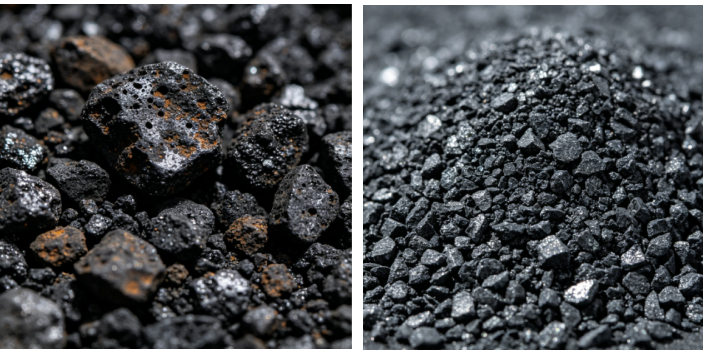
Black silicon carbide (black SiC) is widely used in abrasives, refractories, ceramics, and surface treatment due to its high hardness, thermal stability, and chemical resistance. However, many manufacturers and buyers encounter a common quality issue: unexpectedly high magnetic content in black silicon carbide.
Excessive magnetic impurities can weaken performance, cause workpiece contamination, and lead to serious production problems. Understanding the root causes is critical for maintaining stable quality and avoiding costly failures.
What Is Magnetic Content in Black Silicon Carbide?
Magnetic content mainly refers to iron-based magnetic substances in black SiC, including:
- Metallic iron
- Iron oxides (Fe₂O₃, Fe₃O₄)
- Iron carbide
- Trace nickel or cobalt alloys
Pure silicon carbide itself is non-magnetic. Any magnetic content is a result of external contamination during production and handling.
Typical Industry Requirements
| Application Type | Magnetic Content Requirement |
| General abrasive grade | ≤ 0.02%–0.05% |
| Precision polishing / semiconductor | ≤ 0.001%–0.005% |
Main Causes of High Magnetic Content in Black SiC
1. Raw Material Impurities
The first risk starts at the source.
- Petroleum coke may contain iron and heavy metals
- Quartz sand often carries iron oxides
- Low-grade additives introduce unwanted metallic elements
Once these impurities enter the furnace, they become difficult to remove later.
2. High-Temperature Smelting (Acheson Process)
Black SiC is produced at 2000–2500°C.
- Iron oxides are reduced into metallic iron
- Furnace materials (electrodes, bricks) release particles over time
- Iron becomes embedded into SiC crystal structure
This creates uniform but hidden contamination.
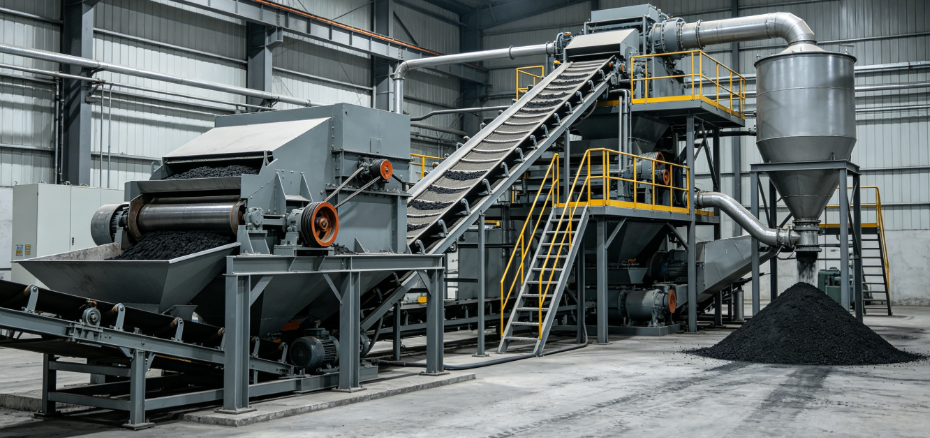
3. Crushing, Milling & Screening Equipment Wear
This is the most common and underestimated cause.
- Steel crushers and ball mills continuously wear
- Fine iron powder mixes directly into SiC grains
- The finer the product, the higher the contamination risk
Without strong separation, this becomes a major quality issue.
4. Insufficient Magnetic Separation
Many factories rely on single-stage or low-intensity separation.
Common problems:
- Weak magnetic field strength
- Uneven feeding
- High processing speed
Result: fine magnetic particles remain in the final product
Real Customer Case: Hidden Magnetic Content Caused Grinding Wheel Cracking
A customer in Mexico once faced a serious and confusing issue.
They purchased black silicon carbide from another supplier and used it to produce ceramic grinding wheels. However, after firing, the grinding wheels developed cracks repeatedly.
- The formulation was correct
- The process parameters were stable
- Yet the defect persisted
They were unable to identify the root cause and eventually came to us for support.
After analyzing their material, we found the key issue:
👉 Magnetic content was significantly higher than acceptable levels
The excessive iron impurities caused:
- Uneven thermal expansion during firing
- Internal stress concentration
- Structural weakness in the bonded abrasive
We provided them with low-magnetic black SiC, produced with strict multi-stage magnetic separation.
After switching to our material:
- The cracking issue completely disappeared
- Production became stable
- Scrap rate dropped significantly
Since then, they have continued sourcing from us consistently.
Harm Caused by High Magnetic Content
- Reduces sharpness and lifespan of abrasives
- Causes scratches in precision applications
- Leads to cracks in ceramic bonded products
- Lowers high-temperature stability in refractories
- Introduces rust and contamination in surface treatment
- Increases rejection rates and production cost
Effective Solutions to Reduce Magnetic Content
1. Improve Raw Material Quality
- Use high-purity quartz sand
- Select low-iron petroleum coke
- Perform incoming material inspection
2. Use Multi-Stage Magnetic Separation
- Primary + secondary high-intensity separation
- Target fine magnetic particles
- Ensure stable low magnetic levels
3. Optimize Processing Equipment
- Replace carbon steel with wear-resistant or ceramic liners
- Use stainless or low-contamination systems where possible
4. Strengthen Washing & Drying
- Water washing removes loose particles
- Acid leaching removes residual iron oxides
5. Strict Batch Testing
Follow international standards:
- GB/T 3045
- FEPA 44
- Customer-specific specifications
Ensure consistent batch-to-batch control
Conclusion
High magnetic content in black silicon carbide is not unavoidable—it is a controllable quality issue.
It originates from:
- Raw materials
- Smelting reactions
- Equipment wear
- Insufficient purification
By implementing proper control measures, manufacturers can achieve stable low-magnetic SiC suitable for high-end applications.
What This Means for Your Procurement
If you want to avoid hidden risks:
- Do not rely on appearance alone
- Always check magnetic content data
- Evaluate your supplier’s purification capability
Because in many cases:
👉 The real problem is not visible—until it affects your production.