Black silicon carbide (SiC) is one of the most widely used abrasive and refractory materials worldwide, valued for its high hardness, wear resistance, and thermal stability. Among its core physical properties, bulk density directly affects processing performance, product consistency, transportation costs, and end-use efficiency.
Many manufacturers and buyers encounter black silicon carbide bulk density problems: unstable values between batches, below-standard results, uneven particle packing, and inaccurate test data. These issues lead to poor grinding performance, higher material consumption, and quality complaints.
This article breaks down the common bulk density problems of black silicon carbide, their root causes, industry standards, testing methods, and practical solutions to help you stabilize quality and improve application performance.
What Is Bulk Density of Black Silicon Carbide?
Bulk density (loose bulk density) refers to the mass of black silicon carbide particles per unit volume in a naturally stacked state, including voids between grains. It is usually expressed in g/cm³ or kg/m³.
Unlike true density, bulk density reflects stacking efficiency, which is determined by particle shape, size distribution, purity, and surface condition.
Typical Bulk Density Range for Black Silicon Carbide
- Coarse grits (F4–F220): 1.20–1.60 g/cm³
- Fine and micro grits (F230–F1000): 0.95–1.44 g/cm³
- High-purity 99% black SiC: often reaches 1.40–1.68 g/cm³
Deviations from these ranges are the main black silicon carbide bulk density problem.
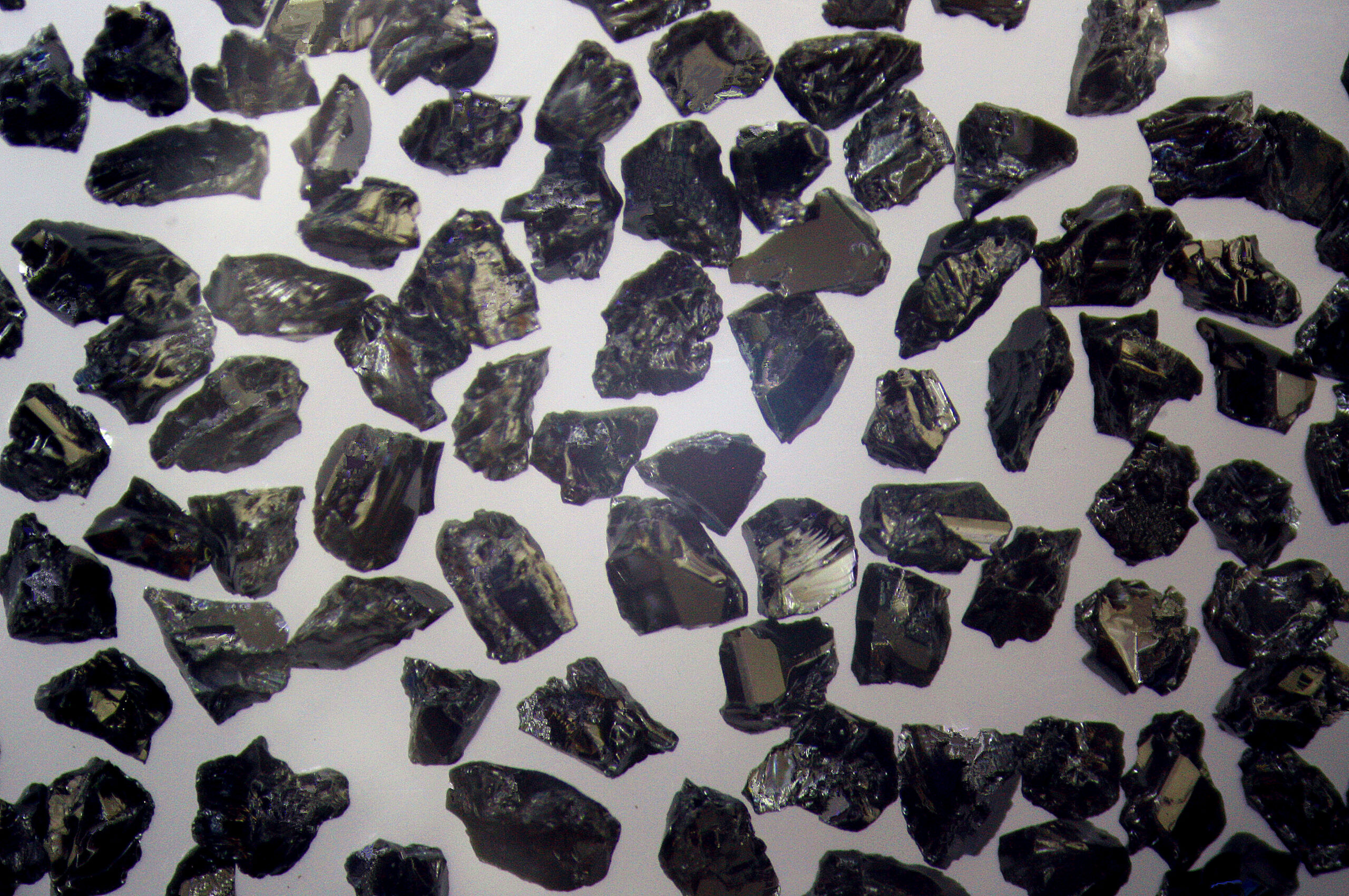
Common Black Silicon Carbide Bulk Density Problems
1. Inconsistent Bulk Density Between Batches
This is the most frequent issue in production and procurement. One batch meets the standard, while the next is too low or too high, causing unstable performance in grinding wheels, sandblasting, refractory castables, and ceramic products.
2. Low Bulk Density (Below Standard Range)
Low bulk density means poor particle stacking and excessive voids. It results in:
- Rederved abrasive tool density and shorter service life
- Increased material usage in refractories
- Larger volume during transportation, raising logistics costs
3. Inaccurate Test Results Leading to Misjudgment
Many enterprises use non-standard methods, leading to false data. Common errors include uneven filling, excessive vibration, unremoved moisture, and agglomerated particles.
Main Factors Causing Bulk Density Problems
Particle Size Distribution
An overly wide or uneven particle size distribution reduces stacking efficiency. Too many fine powders or oversized grains both lower bulk density.
Particle Morphology
Sharp, needle-like, or flaky silicon carbide particles create more voids. Blocky, rounded grains improve stacking and increase bulk density.
Raw Material & Purity
Impurities such as free carbon, iron oxide, and dust reduce effective particle density and disrupt stacking. High-purity raw materials (petroleum coke, high-quality quartz sand) help maintain stable bulk density.
Production Process
Inadequate crushing, incomplete classification, insufficient washing, and improper drying all contribute to black silicon carbide bulk density problems.
Standard Testing Method for Bulk Density
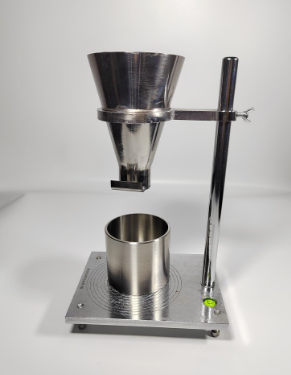
To solve the black silicon carbide bulk density problem, unified testing is essential. Most manufacturers follow FEPA 44 and Chinese standard GB/T 2483 or JB/T 11433-2013.
Basic Testing Steps
- Dry the sample to remove moisture
- Break up agglomerates gently
- Pour particles freely into a standard measuring cup
- Level the surface without compaction
- Weigh and calculate using:Bulk Density = Mass (g) / Volume (cm³)
Incorrect operation is a major hidden cause of unstable results.
Solutions to Black Silicon Carbide Bulk Density Problem
1. Optimize Particle Size Classification
Use multi-stage air classification or sieving systems to ensure narrow particle size distribution, improving bulk density.
2. Improve Crushing & Shaping Process
Adopt shaping crushers to produce more blocky particles and reduce needle-like and flaky grains.
3. Strengthen Washing & Purification
Remove fine dust, free carbon, and impurities through water washing or chemical cleaning to increase effective particle density.
4. Standardize Quality Inspection
Establish fixed sampling and testing rules to detect bulk density abnormalities in advance.
5. Select Suitable Grade for Application
- High bulk density: for bonded abrasives, refractories
- Medium bulk density: for sandblasting, surface treatment
- Controlled bulk density: for ceramic and composite materials
The black silicon carbide bulk density problem is closely related to particle size, shape, purity, and production control. Low or unstable bulk density reduces product performance and increases costs.
By optimizing particle grading, improving shaping processes, strengthening purification, and standardizing testing, enterprises can effectively solve bulk density issues and ensure stable, high-quality black silicon carbide products.
For buyers, checking bulk density data and particle morphology is an effective way to evaluate SiC quality before purchase.