If you are sourcing abrasives for stable production, one question keeps coming back:
Why does Black Silicon Carbide F120 look “standard”, yet perform so differently from supplier to supplier?
For many procurement teams, F120 is not a specialty grit — it is a workhorse size that quietly affects yield, consistency, and downstream cost.
This article helps you make that decision with clarity.
Why Does This Question Keep Troubling Procurement Teams?
For buyers, Black SiC F120 often sits in an uncomfortable middle ground:
- not coarse enough to “cut everything fast”
- not fine enough to “guarantee surface finish”
- yet used across multiple product lines
The problem is not whether to use F120. The problem is how to choose the right F120 without learning through production losses.
Common buyer frustrations include:
- same grit size, same COA — different performance
- trial orders that work once, then drift
- price-driven switches causing hidden quality issues
This is why F120 becomes a repeated internal discussion point in purchasing meetings.
What Is Black Silicon Carbide F120?
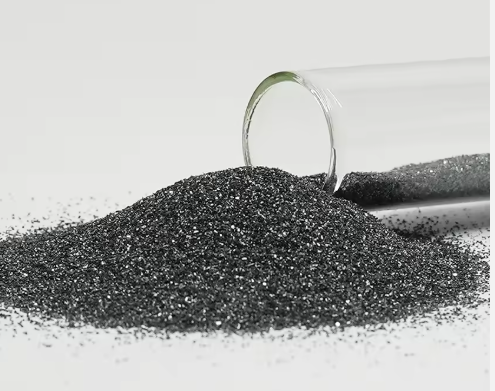
Black Silicon Carbide (Black SiC) is a synthetic abrasive produced by smelting petroleum coke and quartz sand in an electric resistance furnace.
F120 is a FEPA-standard grit size, positioned in the medium-fine range.
Typical Particle Characteristics of F120
| Parameter | Typical Range |
| Average particle size (D50) | ~115–125 μm |
| Shape | Sharp, angular |
| Hardness | ~9.2–9.3 Mohs |
| Brittleness | Medium–high |
| Cutting behavior | Aggressive but controllable |
This makes F120 ideal when material removal efficiency and surface consistency must be balanced.
Common Market Misunderstandings About Black SiC F120
Before discussing applications, it is important to address what often goes wrong in the market.
Misunderstanding #1: “All F120 Is the Same”
On paper, many offers look identical:
- same grit distribution
- similar chemistry
- compliant COA
In reality, cutting behavior varies widely.
Misunderstanding #2: “Lower Price Means Better Cost”
A cheaper F120 often introduces:
- unstable grinding behavior
- higher wheel consumption
- customer complaints downstream
The result is higher total cost, not savings.
Technical & Production Explanation Behind F120 Performance
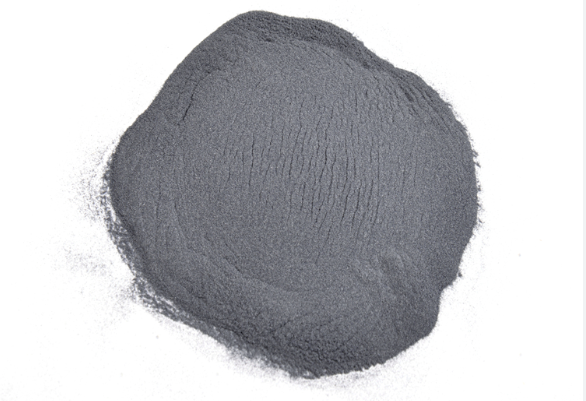
From a production perspective, F120 performance is shaped by more than size.
Key technical drivers include:
- crystal formation during fusing
- controlled crushing vs over-crushing
- classification accuracy
- post-treatment (air-washed vs water-washed)
Small deviations at these stages lead to:
- uneven self-sharpening
- excess fines or flats
- inconsistent cutting pressure
This is why two F120 materials can behave completely differently in the same application.
Main Industrial Applications of Black SiC F120
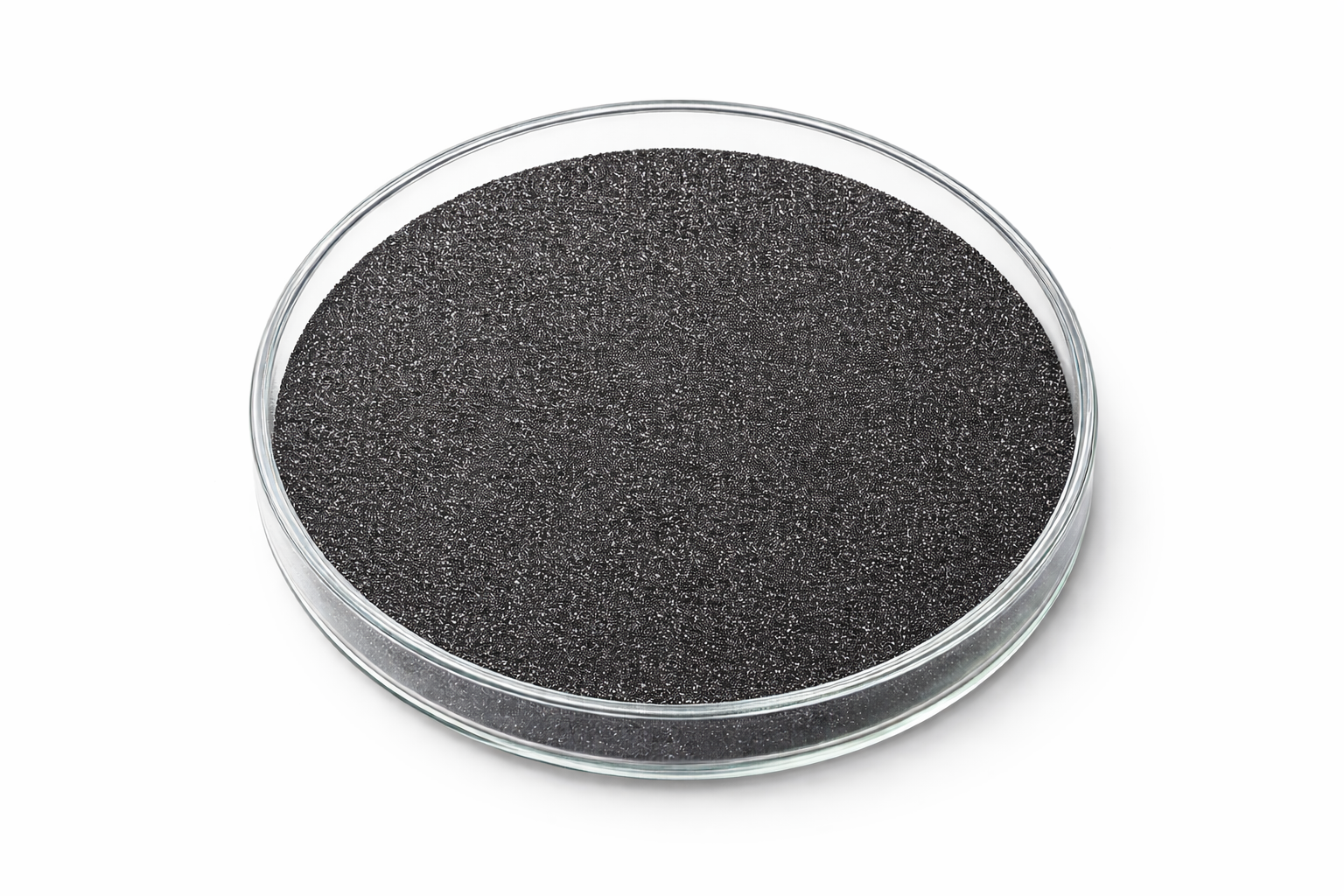
- Resin-Bond Grinding Wheels
Black SiC F120 is widely used in resin-bonded grinding wheels for:
- cast iron
- non-ferrous metals
- hard alloys
- stone and construction materials
Why F120 works well here:
- sharp edges initiate fast cutting
- grit size avoids excessive scratching
- stable wheel wear behavior
| Requirement | Why F120 Fits |
| Cutting speed | High initial sharpness |
| Surface finish | More uniform than F80–F100 |
| Wheel life | Balanced self-sharpening |
- Coated Abrasives (Belts & Discs)
In coated abrasives, F120 is a core grit size for:
- metal surface preparation
- weld seam smoothing
- oxide and scale removal
It is especially effective when buyers want visible scratch control without slowing down throughput.
| Application | Performance Benefit |
| Stainless steel prep | Controlled scratch pattern |
| Carbon steel | Fast stock removal |
| Aluminum | Low loading risk |
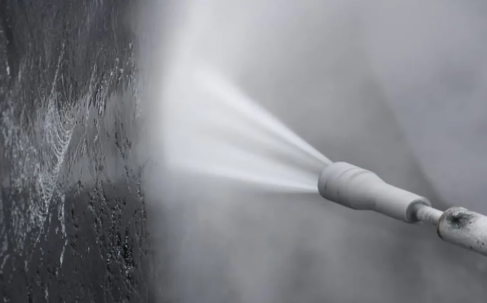
- Surface Preparation & Light Blasting
Although not as coarse as blasting-dedicated grades, Black SiC F120 is used for:
- precision surface activation
- light cleaning of hard surfaces
- pre-coating preparation
This is common in technical blasting where roughness must be controlled.
Key Quality Factors Buyers Should Check (Beyond COA)
Many offers list the same chemistry and grit — yet performance differs.
Here is what truly affects F120 performance:
- Crystal Strength & Fracture Behavior
- Weak crystals = fast dulling
- Over-tough crystals = glazing risk
- Particle Shape Distribution
- Excess flat grains reduce cutting efficiency
- Excess needle-shaped grains increase breakage
- Magnetic Content
High magnetic iron leads to:
- wheel instability
- tool wear
- customer complaints
| Item | Typical Control Target |
| Magnetic material | ≤ 0.015% |
| Oversize particles | Strict FEPA compliance |
| Fines content | Controlled, not minimized blindly |
Water-Washed vs Air-Washed F120
Buyers often ask which one to choose.
| Type | When to Choose |
| Air-washed | General grinding, cost-sensitive |
| Water-washed | Precision grinding, coated abrasives, low contamination needs |
Water-washed F120 offers:
- lower dust
- cleaner particle surfaces
- more stable downstream processing
How We Control and Stabilize Black SiC F120 Quality
From a supplier’s standpoint, F120 must be treated as a controlled production grade, not a by-product.
Key control points include:
- furnace batch consistency
- controlled crushing pressure
- tight FEPA classification windows
- magnetic separation at multiple stages
| Control Item | Typical Target |
| Magnetic material | ≤ 0.015% |
| Oversize particles | Strict FEPA limit |
| Excess fines | Actively controlled |
This is how batch-to-batch stability is maintained — not by COA alone.
Final Thought
Black Silicon Carbide F120 is not just a specification.
It is a production decision that influences:
- efficiency
- stability
- customer satisfaction
If you are evaluating F120 suppliers, focus on:
- process understanding
- consistency logic
- application alignment
That is where long-term cost control really begins.
👉 If you want:
- a side-by-side F120 supplier comparison
- guidance on water-washed vs air-washed selection
- support matching F120 to your grinding system
Let’s move your sourcing decision from trial-and-error to controlled performance.