1. Product Overview
Black Silicon Carbide (Black SiC) F60 is a high‑performance synthetic abrasive grain, produced by fusing high‑purity quartz sand and petroleum coke in an electric resistance furnace at over 2000°C.
With a typical particle size of 212–300 μm (FEPA F60 standard), it features sharp angular grains, high hardness, excellent cutting force, and good recyclability.
It is widely regarded as one of the most cost‑effective blasting media for surface treatment on hard, brittle, or high‑strength materials.
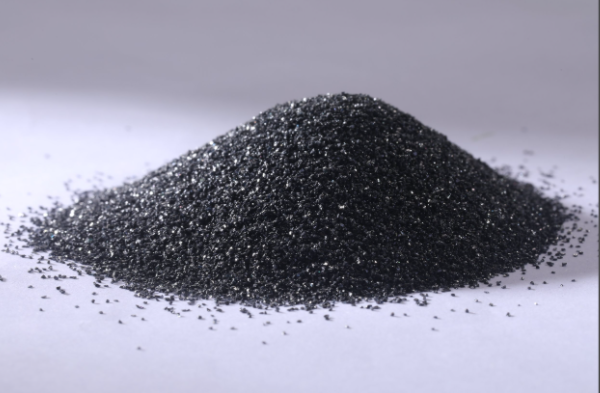
Compared with garnet, glass beads, brown fused alumina, and white fused alumina, Black SiC F60 delivers higher impact efficiency and deeper texturing.
It balances aggressive material removal and controllable surface roughness, making it irreplaceable in precision sandblasting, etching, cleaning, and surface strengthening.
2. Key Physical & Chemical Properties
Black SiC F60’s outstanding performance comes from its stable crystal structure and strict quality control. Typical specifications are as follows:
- Hardness: Mohs 9.2, second only to diamond and cubic boron nitride
- SiC purity: ≥98.5%
- Bulk density: approx. 1.5–1.8 g/cm³
- Melting point: ~2700°C
- Chemical stability: inert to acids, alkalis, and organic solvents
- Particle shape: sharp angular, ideal for cutting and etching
- Low impurity: low free carbon, low magnetic matter, low dust
These properties ensure stable blasting performance, low wear on blasting equipment, and consistent surface quality even under long production cycles.
3. Why F60 Is the Most Popular Size for Sandblasting
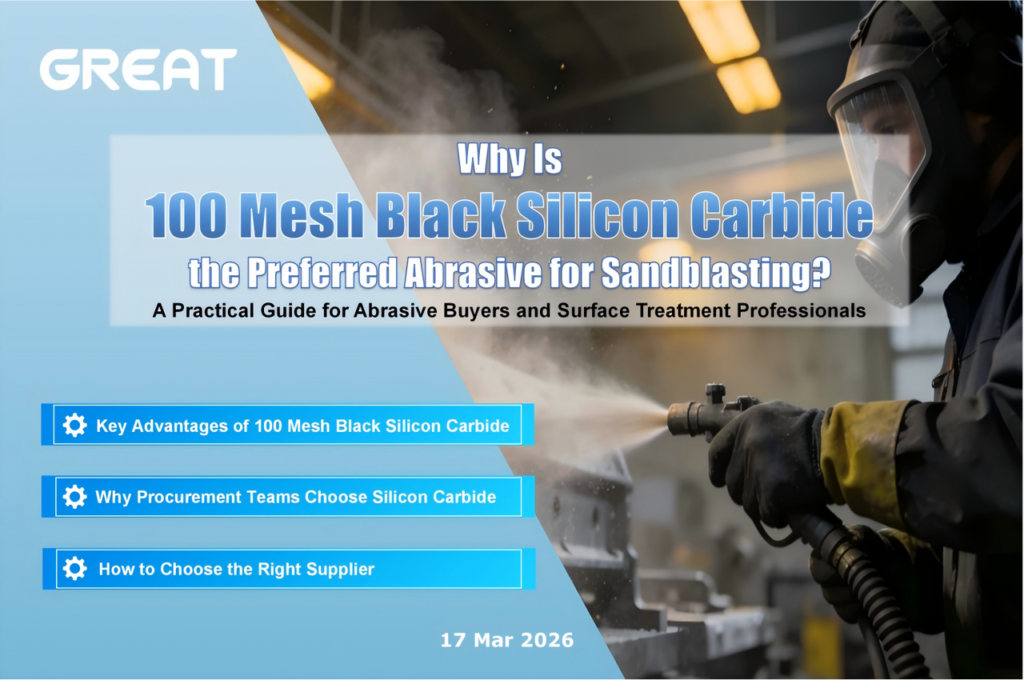
Among all mesh sizes, F60 is the most widely used grade for general sandblasting due to its balanced versatility:
- Moderate aggressivenessIt removes rust, oxide scale, old coatings, and welding residues efficiently without excessive substrate erosion.
- Ideal surface profileIt creates a uniform anchor pattern for better adhesion of paints, coatings, and thermal sprays.
- High reusabilityParticles resist shattering upon impact; they can be recycled many times, lowering per‑unit processing cost.
- Wide compatibilityWorks with pressure‑blast cabinets, suction machines, and mobile blasting units for both small parts and large structural workpieces.
In short, F60 hits the sweet spot between cleaning speed, surface finish, and economy.
4. Main Sandblasting Applications of Black SiC F60
4.1 Stone & Glass Processing
Black SiC F60 is the first choice for marble, granite, stone carving, and architectural glass etching. Its sharp grains create clear, layered textures without chipping brittle materials. It is widely used in tombstone lettering, decorative glass, and art stone production.
4.2 Metal Surface Treatment
It is widely used for:
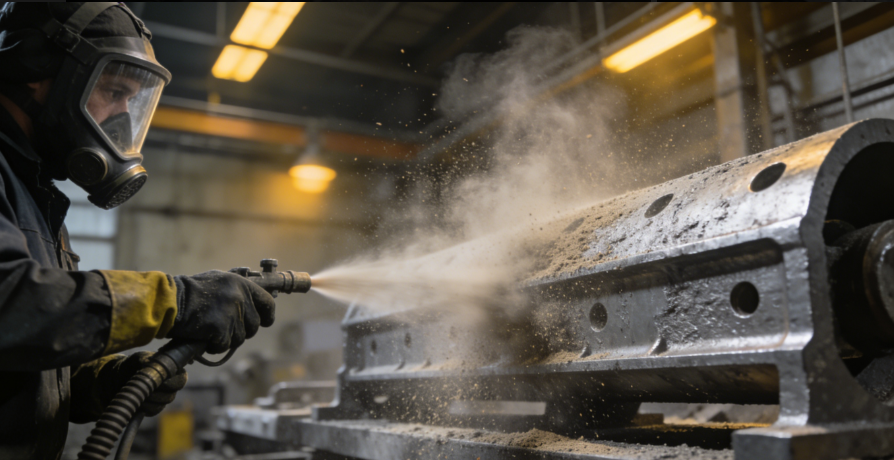
- Rust and scale removal on steel, stainless steel, and alloy parts
- Pre‑coating surface preparation
- Deburring and edge rounding of castings and forgings
- Passivation and strengthening of semiconductor parts
Unlike softer abrasives, Black SiC F60 cleans heat‑resistant alloys and high‑strength steel effectively without leaving embedded particles.
4.3 Ceramic & Refractory Products
It blasts electronic ceramics, structural ceramics, and refractory materials to remove firing residues, improve surface roughness, and enhance bonding strength in assembly.
4.4 Non‑ferrous Metal & Composite Materials
Suitable for aluminum, copper, titanium, and fiber‑reinforced composites, it provides controlled cleaning and texturing with minimal surface damage.
5. Advantages Over Other Blasting Media
| Abrasive Type | Cutting Efficiency | Hardness | Recyclability | Typical Application |
| Black SiC F60 | Very High | 9.2 | High | Hard/Brittle materials |
| Garnet | Medium | 6.5–7.5 | Medium | Shipbuilding, general steel |
| Glass Beads | Low | 5.5–6 | Low | Polishing, peening |
| Brown Fused Alumina | High | 9 | Medium | Heavy‑duty cleaning |
Core advantages of Black SiC F60:
- Higher efficiency = shorter processing time
- Longer service life = lower total cost
- Sharp and consistent texture = stable surface quality
- Chemically inert = no contamination or corrosion
6. Usage Tips for Better Performance
- Blasting pressure: 0.4–0.7 MPa for most metals; 0.2–0.4 MPa for stone/glass to avoid breakage.
- Spray distance: 100–300 mm for uniform etching.
- Dust control: use dust collectors to maintain workplace safety and reduce grain loss.
- Recycling: sieve regularly to remove fine dust and broken particles; maintain consistent grain size.
- Storage: keep dry and sealed to prevent moisture and contamination.
7. Conclusion
Black Silicon Carbide F60 is a high‑efficiency, multi‑purpose, and cost‑effective sandblasting abrasive.
Its high hardness, sharpness, chemical stability, and ideal particle size make it suitable for stone, glass, metal, ceramics, and composite surface treatment.
Whether for industrial cleaning, precision etching, pre‑coating preparation, or decorative texturing, Black SiC F60 provides reliable, repeatable results.
As surface treatment requirements become more demanding across manufacturing, construction, and art industries, Black SiC F60 will continue to be a preferred solution for high‑quality sandblasting operations.