Silicon carbide (SiC) is one of the most important non-oxide materials used in modern refractory applications. Thanks to its unique crystal structure and strong covalent bonding, silicon carbide–based refractories offer an excellent combination of mechanical strength, thermal performance, and chemical stability, making them widely used in metallurgy, cement, power generation, petrochemical, and other high-temperature industries.
The main advantages of silicon carbide in refractory materials can be summarized as follows.
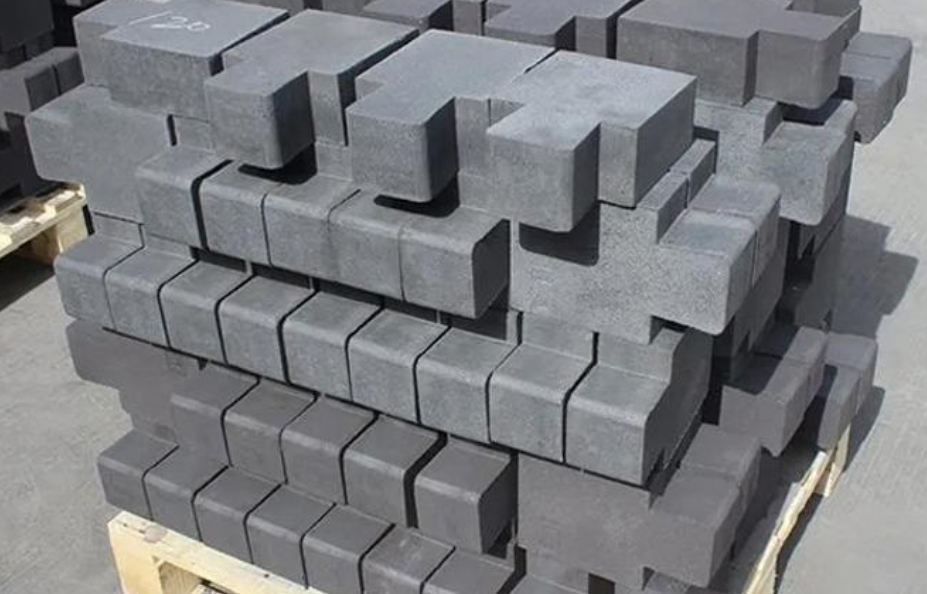
- Outstanding Wear Resistance
Silicon carbide has a hardness second only to diamond, giving it exceptional wear resistance. Because of this property, silicon carbide refractories are ideal for components exposed to severe abrasion, such as:
- Wear-resistant pipelines
- Impellers and pump chambers
- Cyclones
- Ore bucket linings
In practical applications, the wear resistance of silicon carbide materials is 5–20 times higher than that of cast iron or rubber, significantly extending service life and reducing maintenance frequency. Silicon carbide is also considered an ideal material for aviation runways due to its superior abrasion resistance.
In addition, when silicon carbide powder is coated onto the inner wall of turbine impellers or cylinder bodies using special surface treatment technologies, the wear resistance of these components can be improved, and their service life can be extended by 1–2 times.
- Erosion and Corrosion Resistance
The erosion resistance of silicon carbide refractories depends strongly on the type of bonding system used.
In silicate-bonded silicon carbide, the bonding phase contains SiO₂, which can react with slags to form low-melting-point compounds. These compounds are easily eroded by slag, resulting in relatively poor chemical resistance.
By contrast, silicon nitride–bonded and silicon oxynitride–bonded silicon carbide materials exhibit much better corrosion resistance. This is because most molten metals and slags cannot easily wet silicon nitride or silicon oxynitride phases, significantly reducing chemical attack. As a result, these bonded systems perform better than silicate-bonded silicon carbide in aggressive chemical environments.
- Excellent Thermal Shock Resistance
Silicon carbide refractories are well known for their excellent thermal shock resistance. This is mainly due to:
- High thermal conductivity
- Low thermal expansion coefficient
However, thermal shock performance is also closely related to the bonding phase.
Experimental tests show that when samples are heated to 1200 °C for 20 minutes and then air-cooled repeatedly:
- Silicate-bonded silicon carbide shows a gradual decrease in elastic modulus as the number of thermal shock cycles increases.
- Silicon nitride–bonded silicon carbide maintains a nearly constant elastic modulus for up to 30 thermal shock cycles, but after the 31st cycle, the elastic modulus drops sharply, leading to sudden failure.
- Silicon oxynitride–bonded silicon carbide behaves similarly to silicate-bonded products, with a smooth and gradual decrease in elastic modulus and no sudden failure.
In practical applications, silicate-bonded silicon carbide products often show visible signs such as expansion, cracking, or deformation before failure, making it easier to predict their service life under thermal shock conditions.
- High Thermal Conductivity
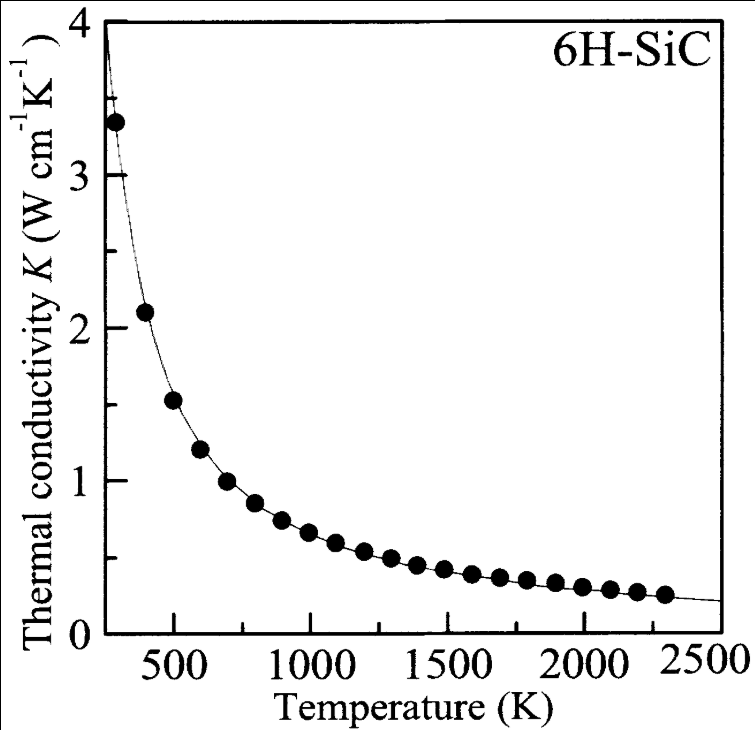
Silicon carbide itself has excellent thermal conductivity. As a result, refractory materials with a high silicon carbide content typically exhibit thermal conductivity values above 14.4 W/(m·K).
During service, the thermal conductivity of silicon carbide particles may decrease slightly due to surface changes, but the bonding system still plays an important role:
- Silicon nitride–bonded and silicon oxynitride–bonded silicon carbide refractories show higher thermal conductivity.
- Silicate-bonded silicon carbide refractories have relatively lower thermal conductivity.
High thermal conductivity is especially beneficial in applications where rapid heat transfer and temperature uniformity are required.
- Oxidation Resistance
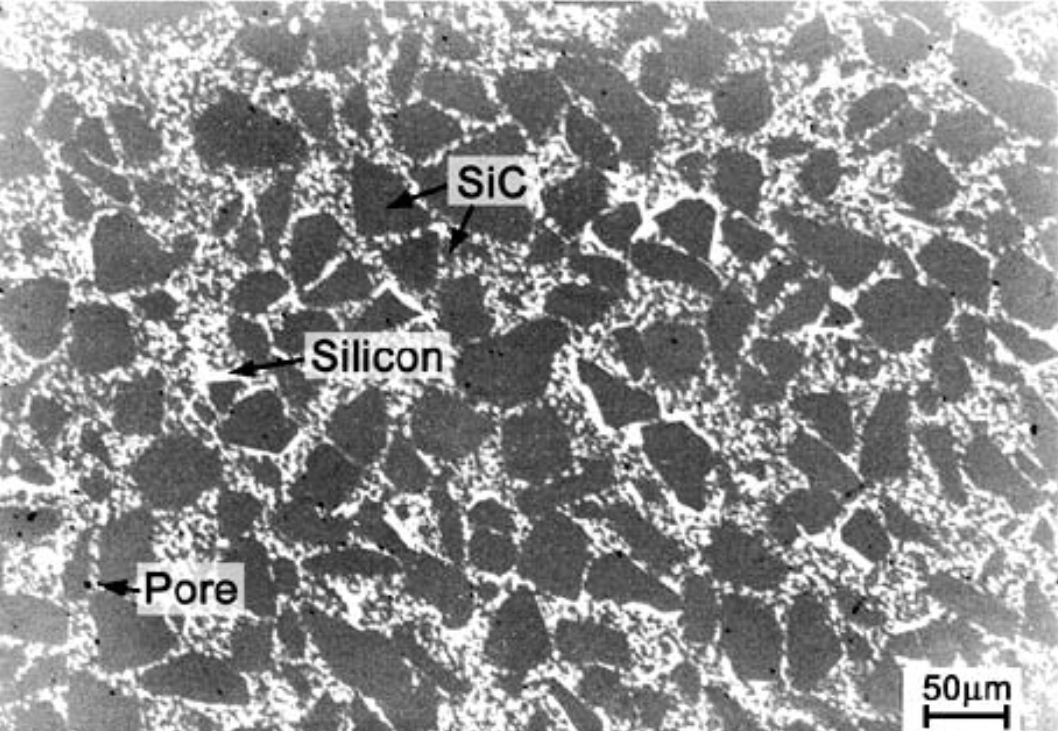
The oxidation resistance of silicon carbide refractories also varies significantly with the bonding phase.
- Silicon nitride–bonded silicon carbide has relatively low oxidation resistance due to its microstructure. The interwoven fibrous bonding phase results in high permeability, limiting the protective effect of silicon carbide particles.
- In silicate-bonded and silicon oxynitride–bonded silicon carbide, the silicon carbide particles are encapsulated by a continuous matrix, which provides better protection against oxidation.
Although silicate-bonded and silicon oxynitride–bonded silicon carbide show similar oxidation resistance in short-term tests, their differences become more evident during long-term high-temperature service.
- Superior Slag Resistance
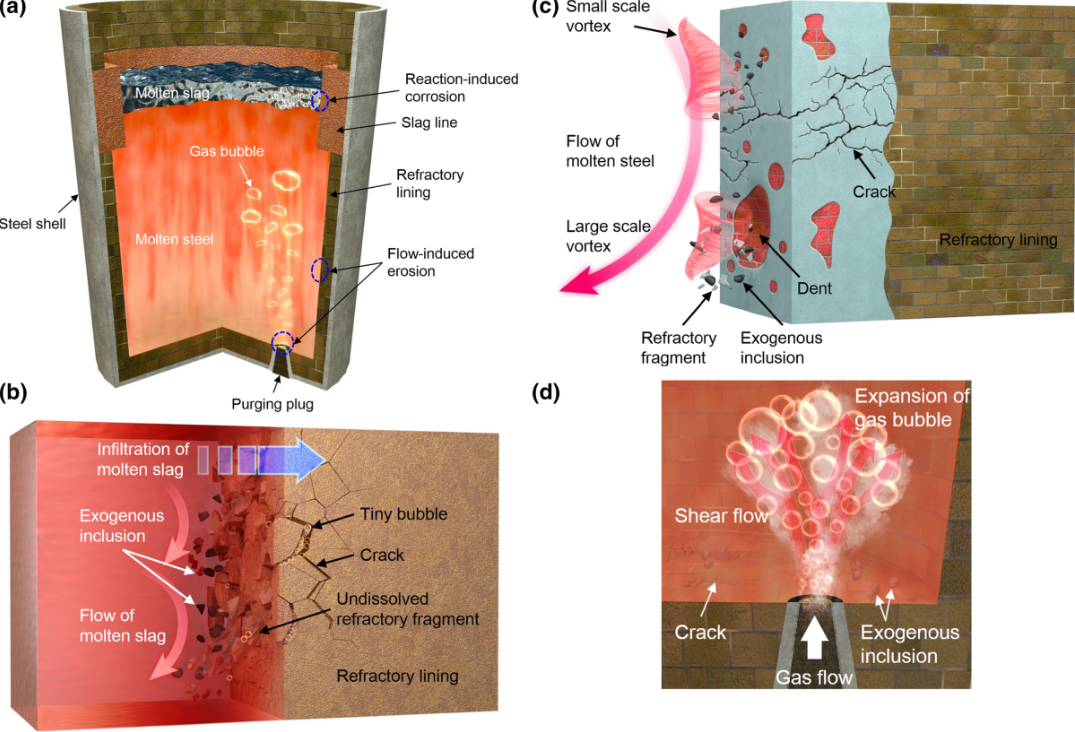
Slag resistance refers to the ability of refractory materials to withstand erosion and scouring by slag at high temperatures. In a broad sense, slag includes:
- Metallurgical slag
- Fuel ash and fly ash
- Molten metals and liquid glass
- Solid materials such as sintered cement blocks, calcined lime, and iron filings
- Gaseous substances such as CO, fluorine, sulfur, zinc vapor, and alkali vapors
Silicon carbide refractory castables exhibit excellent slag resistance because slag does not easily wet SiC surfaces. This behavior is closely related to the crystal structure of silicon carbide.
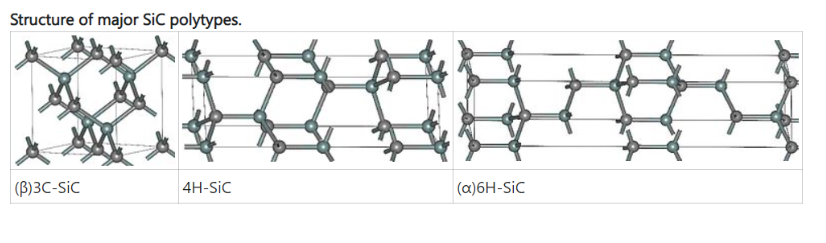
Silicon carbide exists in both α-SiC and β-SiC forms. α-SiC includes many polytypes (such as 4H, 15R, and 6H), with 6H-SiC being the most widely used in industry. In this structure, silicon and carbon atoms are arranged alternately in layers with strong covalent bonding.
Below 1600 °C, silicon carbide mainly exists as β-SiC, while above this temperature it gradually transforms into α-SiC through recrystallization. These phase transformations involve no volume change, ensuring structural stability.
Because of its strong covalent bonds, silicon carbide maintains high hardness and elastic modulus even at high temperatures. It is highly resistant to most acids and alkalis, and any reaction products formed with slag generally have low melting points. Compared with oxide refractories, silicon carbide therefore shows significantly superior slag resistance.
Conclusion
Thanks to its exceptional wear resistance, corrosion resistance, thermal shock resistance, high thermal conductivity, oxidation resistance, and slag resistance, silicon carbide has become an indispensable material in advanced refractory applications. When combined with appropriate bonding systems, silicon carbide refractories can deliver long service life, stable performance, and lower overall operating costs in the most demanding high-temperature environments.